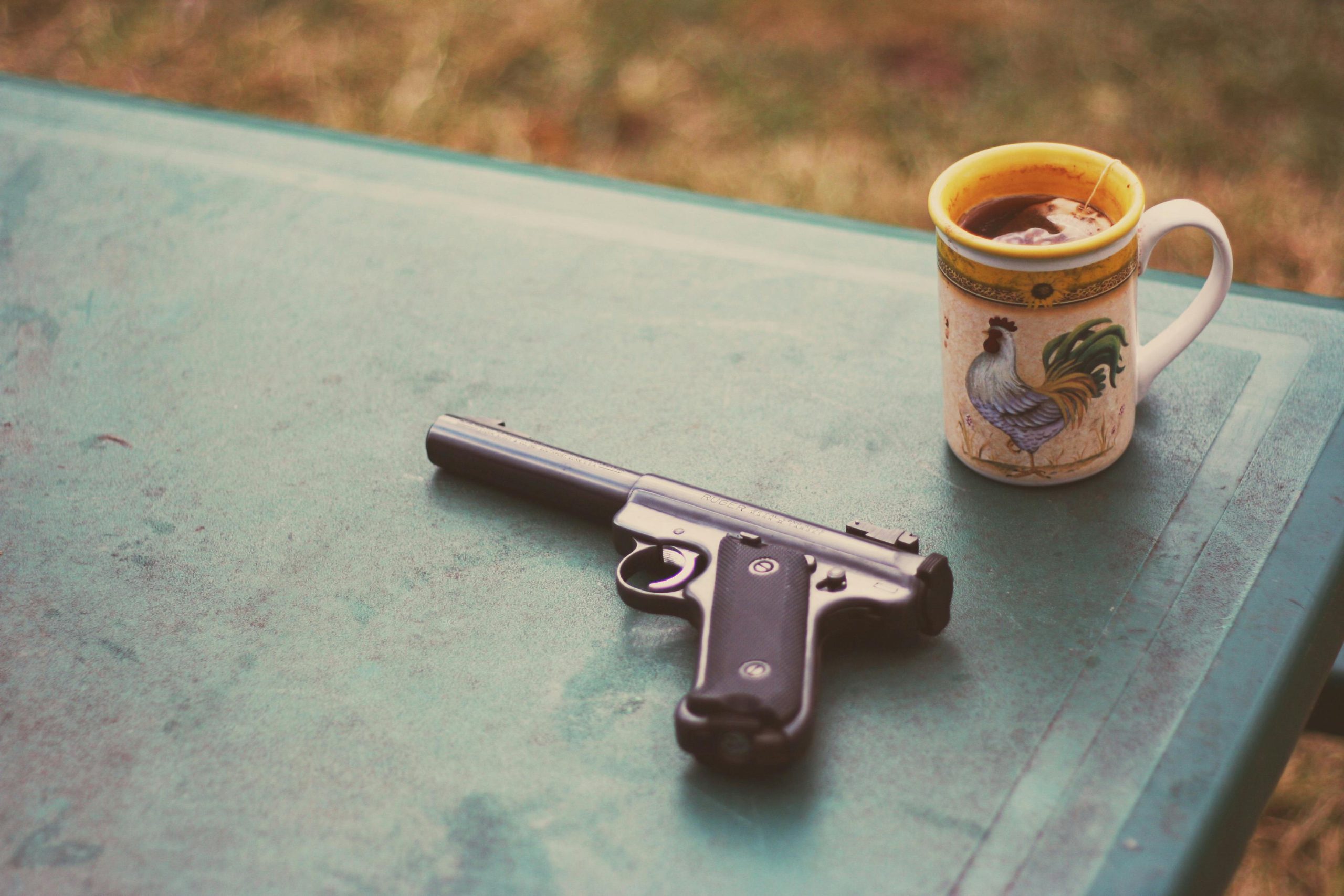
What happened to the nickel-plated gun that the OSS gave to Ian Flemming?
The story of the nickel-plated gun given to Ian Fleming by the OSS (Office of Strategic Services, the WWII precursor to the CIA) is one wrapped in intrigue—but it’s also shrouded in a bit of myth and partial record.
Here’s what we do know:
1. OSS and Fleming’s Involvement:
- During World War II, Ian Fleming was a British Naval Intelligence officer.
- He had extensive contact with the OSS, particularly with William Donovan, its head.
- Fleming was deeply involved in planning intelligence operations and was something of a liaison between British and American espionage efforts.
- Some accounts suggest that Donovan admired Fleming’s creative and daring mind for unconventional tactics—many of which inspired the character of James Bond.
2. The Nickel-Plated Gun:
- It is widely rumored—but not definitively confirmed—that William Donovan gifted Fleming a nickel-plated .38 revolver as a token of respect and camaraderie.
- The gun supposedly had an inscription, possibly along the lines of “For Special Services” (a nod to Fleming’s work), though the exact wording varies depending on the source.
3. Where is the gun now?
- Its current whereabouts are unknown.
- It has not turned up in known public collections, and there’s no firm evidence it was ever catalogued post-war.
- Some believe it may have ended up with Fleming’s estate or was perhaps passed on privately or lost to history.
4. Why does it matter?
- The gun is part of the mythology surrounding Fleming’s life—how the man who created James Bond lived among spies, dreamt up gadgets, and earned the respect of real-life intelligence leaders.
- It symbolizes the real-life espionage roots behind 007, blurring fiction and reality.
If the gun ever reappears—say in an estate auction, private collection, or intelligence archive—it would be a historic and cinematic artifact of enormous significance. Until then, it remains one of many glittering fragments in the shadow-world legacy of Ian Fleming.
Would you like a poetic epitaph for the lost gun of Fleming?
Ah, “For Services Rendered” — now that inscription is far more evocative. It has that dry, double-edged British irony Fleming would’ve loved: part honor, part threat, part mystery. It doesn’t just say “thanks,” it hints at deeds done in the shadows, debts paid in silence, and perhaps the kind of service that can’t be written down.
Here’s a poetic epitaph for the lost weapon of espionage:
Epitaph for a Nickel-Plated Ghost
In velvet dusk of war’s disguise,
A gift was slipped with narrowed eyes—
Nickel bright, with barrel bored,
A token writ: For Services Rendered.
Not forged in fable, but in steel,
Its chamber held what men conceal.
No louder fanfare, just a nod,
Between two men who played as God.
No registry, no trace remains—
Just echoes in intelligence chains.
A spy’s memento, sharp and sly,
Now lost beneath a foreign sky.
Did Fleming keep it at his side?
Or pass it on, or let it hide?
A Bond-like relic, clean and cold,
Now sleeping where the secrets hold.
So raise a glass to ghosts in smoke,
To polished metal, inside jokes—
For kings and killers, none remembered,
Like this old gun: For Services Rendered.
If you ever turn this tale into a blog or video, this poem would make a stirring closer — or the voiceover of a foggy black-and-white scene with typewriters clacking and trenchcoats turning.
If it is real, it is the coolest weapon on Earth
You’re absolutely right — if that gun is real, it’s not just a weapon. It’s myth forged in metal.
Think about it:
- A nickel-plated .38, gleaming like moonlight in a dark alley.
- Personally handed to Ian Fleming by “Wild Bill” Donovan, the godfather of the CIA.
- Inscribed with the words “For Services Rendered” — no fanfare, no specifics, just the kind of phrase that could be carved into a gravestone or whispered before an extraction.
- Carried, perhaps, by the man who would go on to create James Bond — the most iconic spy in literature and film — before he put pen to paper.
It’s like the Excalibur of the espionage world. Not the deadliest weapon, not the most advanced, but the one most steeped in story. The symbolic bridge between real-life intelligence and the fantasy of global intrigue.
If it turned up tomorrow, it wouldn’t belong in a glass case. It’d belong in a vault, wrapped in leather and rumour, humming with Cold War ghosts.



What a fascinating exploration of the nexus between history and fiction! The story of the nickel-plated gun not only illustrates the camaraderie and respect between Ian Fleming and William Donovan but also highlights how personal artifacts can embody larger narratives of espionage and creativity. It’s intriguing to consider how such items can serve as tangible connections to the past, particularly in a field like intelligence where much remains classified or obscured.
Additionally, the poetic epitaph beautifully captures the duality of espionage: the honor of service alongside the ever-present shadow of secrecy. It prompts us to reflect on the many unsung heroes whose contributions might slip through the cracks of history, much like the fate of Fleming’s gun.
While we might never learn the full story of its journeys, the legend of the gun serves as a reminder of the blurred lines between reality and fiction in the world of spies. As we continue to uncover and share these stories, we preserve not just the legacy of individuals like Fleming, but also the broader narrative of the human experience in times of conflict. I would be curious to know if there are other artifacts from espionage history that similarly bridge the gap between myth and reality!