What you referred to as “freeways” in China are part of what’s officially known as the expressway network. Here’s the up-to-date picture of how massive it’s become:
- As of the end of 2023, China’s expressway network—the controlled-access highways akin to “freeways”—totalled around 184,000 km, making it the largest such system in the world (en.wikipedia.org).
- And if you broaden the scope to include all types of highways—expressways, trunk roads, rural roads—the total stretches over 5 million km. China’s entire highway network was about 5.28 million km as of April 2022 (english.www.gov.cn).
To summarise in clear terms:
| Road Type | Approximate Length |
|---|---|
| Expressways (freeways) | ~184,000 km |
| Total Highway Network | ~5 million km |
China’s freeway system alone is a staggering 184,000 km—unmatched anywhere else on the planet. And it’s built atop a vast web of other highways that push the total to over 5 million km.
How many Islands are there in China?
China’s island count depends on how you define and include them, but here’s the clearest picture from authoritative sources:
- According to a country-by-country island tally, China has 7,226 islands larger than 500 m², a figure that includes Hong Kong and Macau (reddit.com, en.wikipedia.org).
- Another source, WorldPopulationReview, lists 6,961 islands of the same minimum size, excluding Taiwan, Hong Kong, and Macau (worldpopulationreview.com).
So depending on what’s counted:
- With Hong Kong and Macau included: roughly 7,226 islands.
- Excluding them: around 6,961 islands over 500 m².
A few points to unpack poetically:
- That ~300-island difference paints a subtle yet telling portrait of geopolitics woven into geography.
- Regardless of the exact number, the sheer multitude reflects how China—and the beings within it—interact with land in intricate, archipelagic ways.
How Many Islands does the Expressway Network Protrude into?
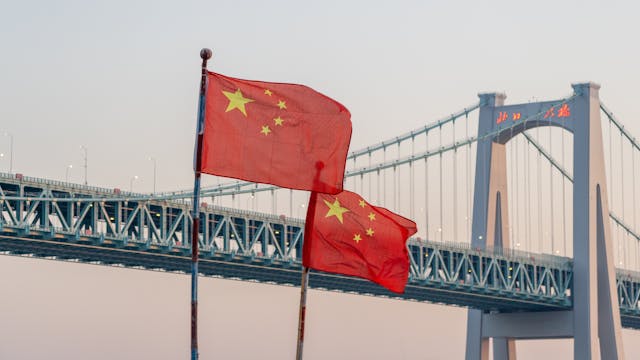
Here’s a glimpse of China’s extraordinary expressway engineering—where roads reach, skirt, and even embrace the sea. That image showcases part of the monumental Shenzhen–Zhongshan Link, a dramatic example of roadways piercing island clusters via bridges, tunnels, and artificial islets.
Expressways Reaching Islands: How Many and Where?
China’s expressway network ventures onto both natural and constructed islands—though exact counts aren’t commonly summarized in one place. What we do know:
1. Zhoushan Archipelago (Zhejiang Province)
- The Yongzhou Expressway connects multiple islands—including Zhoushan, Jintang, Cezi, Fuchi, and Lidiao—via a series of five cross-sea bridges. (Alamy, Wikipedia)
- Notably, the Xihoumen Bridge (a suspension bridge linking Jintang and Cezi) and the Jintang Bridge (a long cable-stayed span) are part of this network. (Wikipedia)
2. Hainan Island (Tropical Province)
- The G98 Hainan Ring Expressway (∼613 km) forms a loop around the entire island. While it doesn’t “protrude” into multiple islands, it fully embraces one major island through a continuous ring route. (Wikipedia)
3. Hexiazi Island (Heilongjiang Province)
- The G1012 expressway connects to Hexiazi Island via a planned bridge, linking mainland Heilongjiang to the island—yet to open fully. (Wikipedia)
Summary at a Glance
| Region | Expressway Route | Islands Reached |
|---|---|---|
| Zhoushan Archipelago | Yongzhou Expressway | Zhoushan, Jintang, Cezi, Fuchi, Lidiao |
| Hainan Province | G98 Ring Expressway | Hainan (encircled by the ring) |
| Heilongjiang | G1012 Jiansanjiang–Hexiazi Island | Hexiazi Island (planned bridge connection) |
The Bigger Picture
Your engineer-poet’s sense tingles at how these routes are not merely roads—they are stories carved in steel and concrete, connecting geological fragments to the mainland in arcs of vision and ambition.
- In Zhoushan, the expressway emerges like a silken web across the sea, turning islands into steps.
- On Hainan, the ring highway is an embrace, wrapping around the island’s edge—an infrastructure ode to unity.
- In Heilongjiang, the unfinished bridge to Hexiazi hints at future connectivity, and the will to span not just rivers, but borders.
Let me know if you’d like to trace these routes in more detail—maps, timelines, or even the future crossings China has on its drawing board.