FROM ITSELF. THROUGH ITSELF. ACCORDING TO ITSELF. BECOMING ITSELF.
A Voynich Manuscript Footnote: Latent Self-Reference in a Cipheric Glance
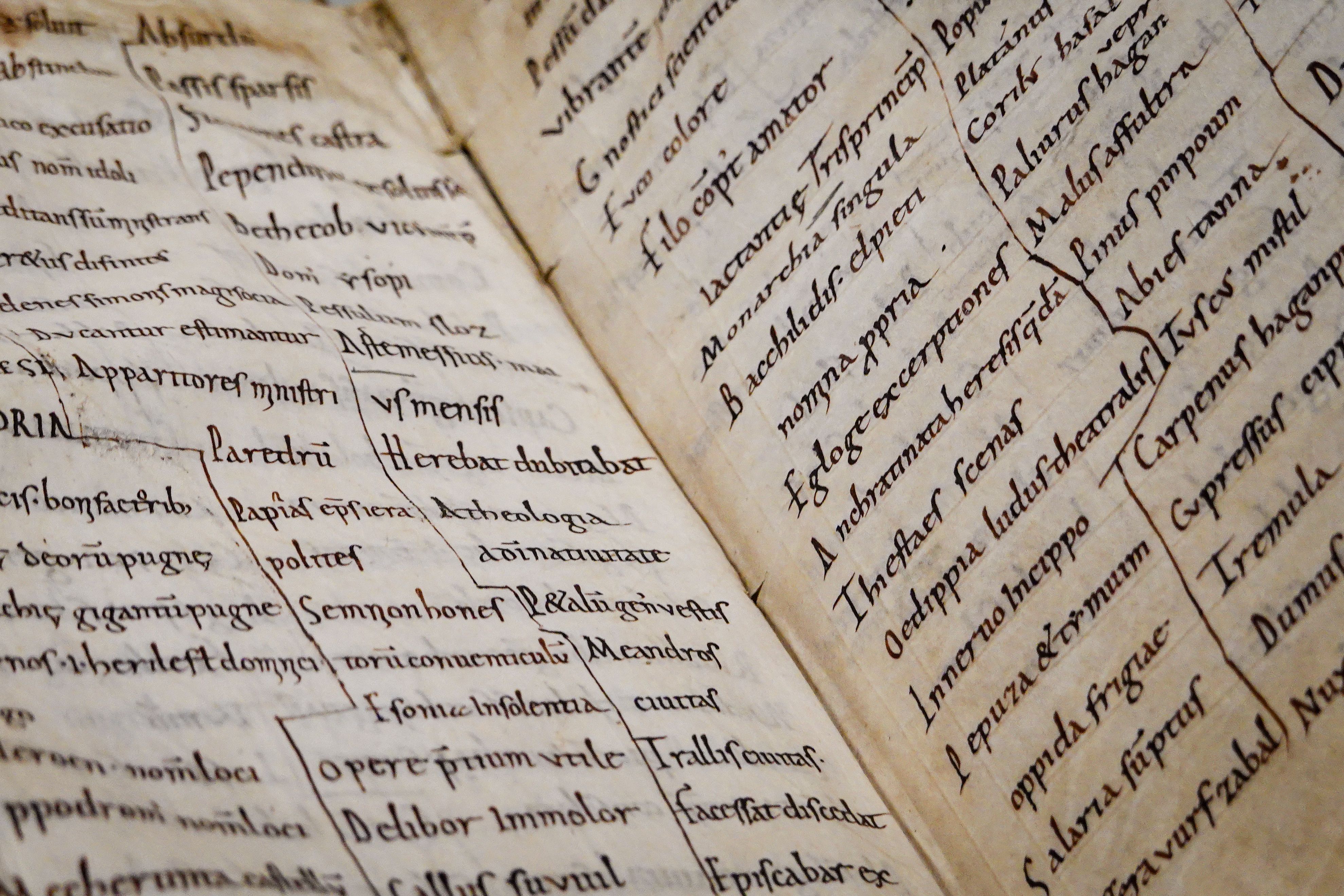
The Voynich Manuscript has long stood as the emblem of epistemic stubbornness: a text whose alphabet, signs, and diagrams resist conventional decipherment, a book that invites specialists and hobbyists alike to perform the ritual of hypothesis and conjecture. It is not merely a cipher or a hoax; it is a provocation to think about language, meaning, and the very architectures by which we claim to know. The Reddit post that traces a seven-word Latin sequence—IPSUM SE IPSE SECUNDUM SESE IPSE SEIPSUM—out of a decoding experiment takes this provocation one step further. It does not claim final meaning; it tends to propose a meta-meaning: a self-referential reflexivity embedded in a system that seems designed to confound receivers from the start. Read as an artifact of inquiry rather than a solution to a riddle, it offers a doorway into how recursion, self-reference, and emergent structure can shape our expectations about knowledge itself.
A cognitive hinge: self-reference as a lens for the manuscript
What the post foregrounds is not merely a string of Latin words but a conceptual hinge—a sequence that foregrounds the SELF as its central motif. IPSUM (itself, the thing), SE (himself, herself, itself), IPSE (the very one, himself), SECUNDUM (according to, in accordance with), SESE (himself, herself, itself), IPSE (the very one), SEIPSUM (himself, itself, the very self). The composition looks like a deliberately staged palindrome of agency and identity: a recursion of the subject within the act of decoding. In other words, the output is not an explanation of the Voynich code but an index of how any act of interpretation tends to reflect back on the interpreter.
This is a provocative invitation to think about two intertwined concerns that resonate far beyond a single manuscript.
- The nature of self-reference in language and information systems.
- The conditions under which a text might be said to reveal itself through its own rules.
To put it plainly: if a decoding transformation generates a seven-word sequence whose anatomy is almost entirely built from forms that hinge on “the self,” what does that imply about the relationship between a decoding method and the meaning it produces? And what could such a pattern—emergent from an unknown script and an opaque grammar—signal about the Voynich manuscript’s original designer’s intent, if any intent is even a meaningful category here?
Contextualising the claim: what the seven words are and are not
The seven Latin words themselves—IPSUM SE IPSE SECUNDUM SESE IPSE SEIPSUM—are not a translation, a direct gloss, or a premeditated motto extracted from a known Latin text. They are the output of a procedure. The author of the Reddit post describes applying a consistent decoding transformation to an actual passage of the Voynich manuscript, producing a sequence that reads as a compact meditation on selfhood and process. Crucially, the claim is not that the entire manuscript suddenly yields a decipherable text. It is that a particular methodological step produced an emergent phrase containing a high density of self-referential semantics.
From an editorial standpoint, there are three things to keep in view when evaluating such a claim:
- The role of the decoding transformation: What are its mathematical rules, how do they map glyphs to Latin words, and what constraints do they impose on the output? Without access to the exact key, the risk is to mistake a structural artefact for semantic content.
- The stability of the result: Would different passages or different iterations of the same algorithm yield similarly self-referential phrases, or is this seven-word outcome an artefact of a specific input?
- The interpretive frame: Self-reference is a powerful conceptual lens, but it is also a well-trodden trope in philosophy, logic, and information theory. Distinguishing a meaningful discovery from a suggestive parallel is essential for scholarly integrity.
To borrow a metaphor from linguistics: this seven-word sequence can be thought of as a phonotactic-grammatical pocket of the larger unknown language—a fingerprint of the decoding apparatus rather than a translation of a latent authorial intention.
The deeper questions: what does self-reference do in a decipherment?
Self-reference operates in three potentially fruitful ways when we encounter a text like the Voynich Manuscript:
- Epistemic reflexivity: The text forces the reader to reflect on their own act of reading. If every decoding step awakens the reader to the machinery by which meaning is produced, the manuscript becomes a laboratory for knowledge production rather than a straightforward source of information.
- Emergent structure: Complex systems often reveal simple rules that, when iterated, generate rich, layered patterns. A self-referential output can be an emergent property of a decoding rule that, at its core, is agnostic about content and heavy on relational structure.
- Metaphysical prompt: The phrase “according to itself” nudges us toward questions about auto-referentiality in language, consciousness, and even biology. Could the Voynich’s script be designed to prompt an exploration of how meaning is constituted, rather than to convey a fixed message?
These are not mere academic abstractions. They map onto broader debates about how to study undeciphered scripts, how to evaluate candidate decodings, and how to understand the limits of linguistic inference when sources lack a transparent anchor in a known language.
Historical framing: why a self-referential fragment matters
The Voynich Manuscript has endured as a symbol of ambiguity in the information age. It sits at the crossroads of code, artwork, and cosmology. Its pages teem with herbal diagrams, celestial charts, and curious diagrams that suggest a worldview in which science, medicine, and mysticism intertwine. The manuscript’s unknown script—paired with drawings that evoke botanical knowledge and astral navigation—has long invited speculative decoding strategies: anagrams, substitution ciphers, invented grammars, or even deliberate hoaxes.
What makes the seven-word Latin fragment worthy of sustained attention is precisely what it foregrounds about the epistemic project surrounding the Voynich: the possibility that a set of rules, rather than a dictionary, shapes interpretation. If a method’s output can concentrate on a self-referential core, it presses us to consider a more meta-level question: to what extent does determining meaning depend on the parser rather than the text? In other words, perhaps some of the manuscript’s enduring mystery stems from the fact that any decipherment is also a decipherer’s construction.
The intellectual payoff is not a definitive key but a clarifying lens: a reminder that the search for meaning in undeciphered scripts often reveals as much about the interpreter’s assumptions as about the original text.
Three pathways for serious inquiry (without overclaiming)
- Methodological transparency: A rigorous report of the decoding transformation is essential. What are the input-output mappings? Are there constraints, priors, or biases baked into the algorithm? Sharing a reproducible framework (while respecting any privacy of keys or proprietary methods) would enable other researchers to assess the robustness of the seven-word result.
- Cross-disciplinary scrutiny: Linguists, information theorists, folklorists, and researchers in semiotics can contribute complementary perspectives. A cross-pertilization can help determine whether self-referential outputs arise from particular statistical properties, from the structure of the sample passage, or from deeper features of the script’s design.
- Philosophical reflection: The self-referential fragment invites productive dialogue about the nature of meaning, the role of interpretation, and the possibility that some texts may be prompts for inquiry rather than conveyors of fixed content. This has implications for how we teach, present, and think about undeciphered artifacts in museums, libraries, and digital archives.
Practical implications for researchers, curators, and readers
- Documentation discipline: When presenting any decode attempt, scholars should be explicit about the algorithm, inputs, and limitations. The history of cryptology warns against the seductive simplicity of a single “aha” moment that glosses over methodological nuance.
- Public engagement with mystery: The Voynich’s allure partly derives from its mystery. Responsible storytelling should balance fascination with discipline, avoiding overclaims that would mislead lay readers about the state of evidence.
- Editorial prudence: In popular articles or blog posts, the temptation to sensationalize a seven-word sequence should be resisted. The value lies in how such findings illuminate the process of decipherment, the psychology of interpretation, and the boundaries of what can be claimed from an undeciphered text.
A concrete direction for future work
If you are pursuing this line of inquiry, consider the following roadmap:
- Publish the decoding key or an open, reproducible version of the method (with safeguards as needed) so independent researchers can attempt replicate and test its outputs across multiple passages within the manuscript.
- Apply the same method to other undeciphered scripts or glossary-laden texts to see whether self-referential outputs recur under similar constraints. If the pattern is unique to the Voynich sample, its significance gains particular weight.
- Develop a taxonomy of outputs: classify results by their linguistic plausibility, their cognitive load, and their alignment with known Latin or Romance language systems. This helps separate serendipitous patterns from structurally meaningful ones.
- Encourage external peer review: assemble a panel of experts from linguistics, cognitive science, and information theory to scrutinize both the method and its interpretations. The value lies in rigorous disagreement and constructive critique, not in a solitary triumph.
Closing reflection: what the seven words invite us to notice
The seven-word sequence—IPSUM SE IPSE SECUNDUM SESE IPSE SEIPSUM—operates as a mirror held up to our own act of inquiry. It asks us to look not only at what a text might say, but at how we come to say it about the text. Whether the sequence encodes a latent authorial intention, a methodological artifact, or a philosophical prompt, its power resides in its capacity to redirect attention toward the process of decipherment itself.
In that sense, the self-referential loop is not a dead end but a dial: tune it, and you hear a different resonance about meaning, agency, and the possibility of a system becoming what it already contains. The Voynich Manuscript remains unsolved, yes. Yet, in the persistence of its mystery, it continues to teach. It teaches us to ask not only what a text means, but how a thinker’s method shapes what counts as meaning in the first place.
What do you see when you read IPSUM SE IPSE SECUNDUM SESE IPSE SEIPSUM? Do you perceive a cipher, a philosophy, or a meta-commentary on the act of decipherment itself? The question, after all, may be less about the words on the page than about the questions we bring to the page—and the recursive, self-directed journey that follows.