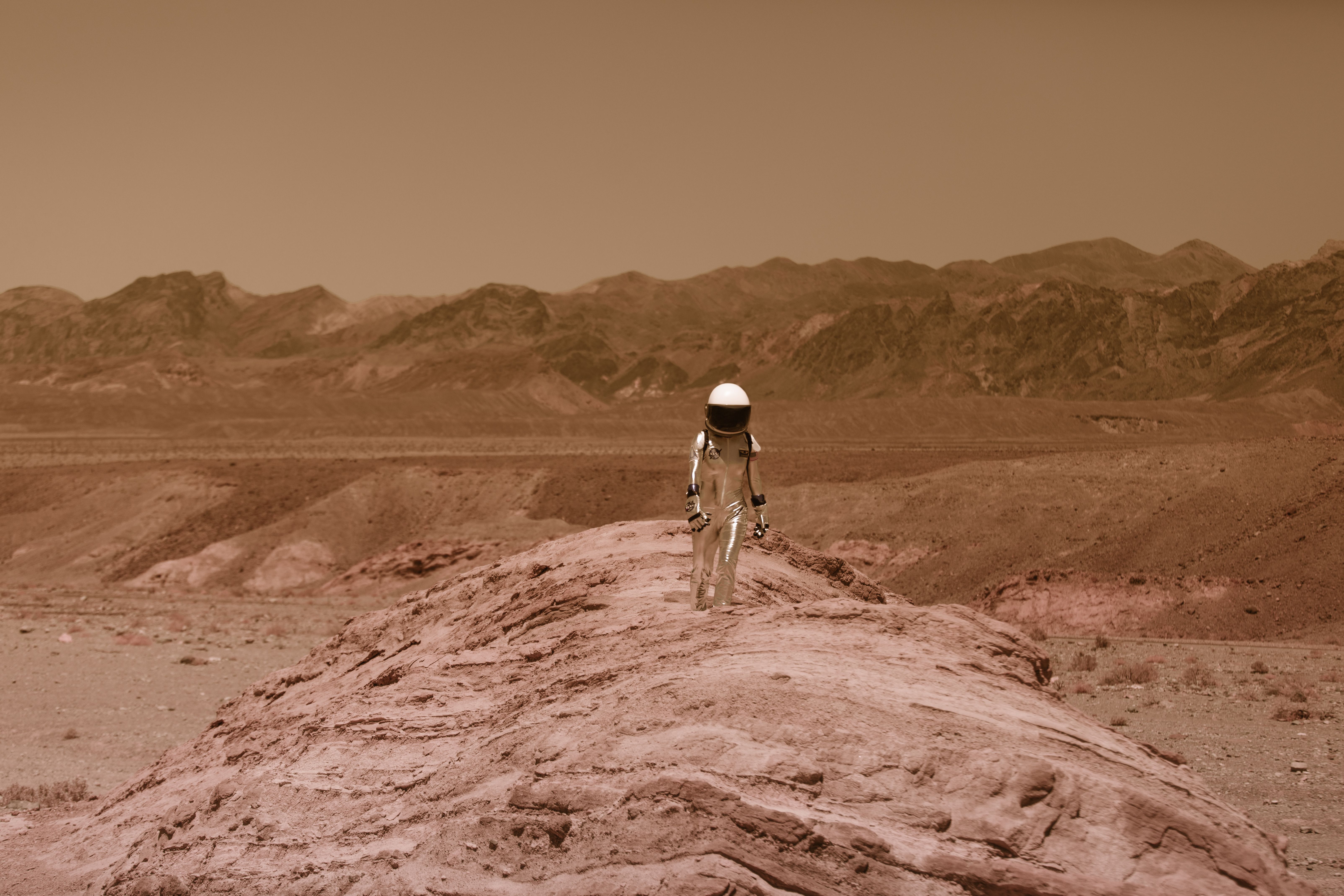
What counts as “scientifically plausible” in the search for extraterrestrial life—and what it would take for such life to be recognisable
The question “What’s the most scientifically plausible alien ever?” travels a familiar path: curiosity about something we don’t fully understand, sharpened by scientific rigor and constrained by what evidence could plausibly be observed. It’s a question that sits at the intersection of astrobiology, planetary science, chemistry and physics, and it invites not just imaginative speculation but careful scrutiny of what we know, what we don’t, and how we would recognize life beyond Earth.
In this piece, we don’t chase speculative proto-species or fanciful appearances. Instead, we begin with the ground rules: what “plausible” means in a scientific sense, how different environments shape possible life, what biosignatures and technosignatures we could realistically detect, and what concrete examples or analogues from Earth’s own biology and geology help us frame the problem. The goal is to outline a disciplined, evidence-informed map of plausible alien life—one that remains open to the unknown while anchored in what we can observe, model, and test.
1) The constraint of environments: life as a chemical phenomenon with footings in physics
Life as we know it on Earth is a complex chemistry executed within certain physical constraints. Carbon-based chemistry, solvent choices (water), and energy gradients are not universal laws but highly favorable conditions for sustaining complex, self-organising systems. When we speculate about alien life, we start from the following practical constraints:
-
Solvent and medium: Water is exceptional because of its solvent properties, liquid range around Earth-like temperatures, and its role in biochemistry. However, alternative solvents (such as ammonia or methane) are not merely speculative fluff; they are plausible in environments where water isn’t available or stable. The idea of “life as chemistry” rather than “Earth-like life” allows for a spectrum of biochemistries, with different solvents, temperatures, and energy sources.
-
Chemical gradients and energy: Life requires a source of energy and gradients to drive metabolism. Photosynthesis on Earth demonstrates the elegance of exploiting light, but chemical disequilibria (redox gradients) at hydrothermal vents, or geochemical disequilibria in planetary atmospheres, could be alternative engines for metabolism.
-
Stability and timescales: For life to persist, chemical networks must be robust to perturbations, yet flexible enough to adapt. Extremely high-pressure, high-temperature, or highly acidic/alkaline environments could either hinder life or foster radically different chemistries. Our plausibility filter weighs environments where long-term stability is compatible with metabolic activity and reproduction.
2) Plausible life forms in varied planetary environments
Among the plausible candidates, several broad archetypes stand out, each tied to a plausible environment:
-
Earth-like biospheres elsewhere: Planets or moons with stable liquid water, moderate temperatures, and a biosphere capable of exploiting available energy sources (solar, chemical, tidal). Such life would resemble Earth biology in core principles (cellular membranes, nucleic acid-like information storage, enzyme-catalyzed chemistry), but with its own lineage, potentially radically different biochemistries due to stochastic evolution. The most parsimonious “alien” here is not a cartoonish Neptune-whale but a microbial ecosystem or simple multicellular life that uses familiar biology adapted to different atmospheric or gravitational conditions.
-
Subsurface ocean worlds: Bodies like Europa, Enceladus, or Ganymede may harbour oceans beneath ice shells, shielded from radiation. If life exists there, it would rely on chemosynthesis rather than photosynthesis, drawing energy from hydrothermal vents or mineral reduction processes. Such life would be evocatively alien—perhaps sparse, microbial, and with metabolisms tuned to gradient-rich, dark environments—yet scientifically plausible given known physics and geochemistry.
-
Methane- or ammonia-based ecosystems: In extremely cold envelopes, methane or ammonia could serve as solvents or buffers for biochemical reactions. Titan-like environments invite speculation about methane-based life with hydrocarbons as structural and catalytic components. These remain more speculative, but not implausible within the chemicalist’s framework, and they broaden the spectrum of plausible life to include radically different biochemistries.
-
High-energy, radiation-rich worlds: Planets with strong radiation or volcanic activity could propel energy-intensive chemistries and selective pressures that produce unique life strategies. Extremophiles on Earth already show us that life can flourish in environments once thought lethal; extrapolating to different host environments remains scientifically meaningful, albeit with a lower a priori probability in many models.
3) The most plausible “alien” by a practical standard: microbial life with universal fingerprints
If we are to name a single most plausible form of alien life, microbial life—an Earth-like, yet potentially distinct, single-celled organism—emerges as the strongest candidate. Why?
-
Universality of cells: Cellular life is a robust organisational principle. The compartmentalisation that defines cells—membranes, genetic storage, metabolic networks—arises as a natural solution to maintaining complex chemistry and enabling replication. If life exists elsewhere, the low-hanging fruit would be organisms that resemble bacteria or archaea in structure, communicating and metabolising in ways that are chemically plausible within their native environments.
-
Detectable biosignatures: Microbial life leaves relatively strong biochemical footprints: methane plumes in an atmosphere without a non-biological source, isotopic fractionation patterns, and recognizable pigment or pigment-like molecules associated with photosynthesis. While Earth’s oxygenic photosynthesis has left an unmistakable oxygen glow in the atmosphere, early signs of microbial biosignatures—such as reduced gases, distinctive carbon isotope distributions, or surface chemistry anomalies—are plausible and detectable with careful observation.
-
Timescale and ubiquity: Microbes are ancient and resilient. They can survive extreme conditions, dispersal is plausible via meteoritic exchange or atmospheric transport, and their metabolisms can adapt to a range of energy sources. The cumulative odds lean toward microbial life being a common, robust entry point for life beyond Earth.
4) How we would recognize plausible aliens from afar
One of the central challenges in astrobiology is detection. If a “most plausible alien” is microbial life on another world, what would we look for?
-
Atmospheric biosignatures: Gas mixtures that are out of chemical equilibrium, such as methane coexisting with oxidants in an atmosphere where abiotic processes cannot sustain both, would be a strong hint. More nuanced combinations or temporal variability of gases could indicate active biochemistry.
-
Surface and remote sensing: Spectroscopic detection of pigmented molecules, such as chlorophyll-like compounds or their chemical analogues, could reveal photosynthetic or photochemically active organisms. Surface mineralogy changes linked to biological processing could also be informative.
-
Subsurface biosignatures: In worlds with oceans beneath ice, direct sampling would be challenging. Indirect indicators—plumes of water or heat flux anomalies, magnetospheric perturbations suggesting hydrothermal activity—could point to habitable subsurface ecosystems where life might thrive.
-
Isotopic patterns: Biological processes preferentially use certain isotopes, subtly shifting isotopic ratios. High-precision measurements of isotopic abundances in atmospheric or exospheric gases could provide a fingerprint of life.
5) What the strongest arguments against the most plausible alien
Skepticism remains essential. The absence of overt signs does not prove nonexistence; it highlights limitations in our observational reach, sensitivity, and our models of planetary atmospheres and geology. Moreover, the diversity of potential chemistries means that some life might be so alien in its biochemistry that our conventional biosignature framework would miss it entirely. There is also the danger of anthropocentric bias: assuming life must resemble Earth life in chemical makeup, energy exploitation, or ecological structure can blind us to truly novel possibilities.
6) Real-world anchors: lessons from Earth and contemporary exploration
-
Extremophiles show life’s ingenuity: From thermophiles in boiling springs to acidophiles in highly acidic environments, Earth demonstrates that life can flourish across extremes. This broadens the set of environments we consider plausible places to search.
-
Planetary diversity dictates different strategies: Venus’s harsh surface, Mars’s arid but historic habitability, the icy moons of the outer solar system — each environment reframes what counts as plausible life and what detection methods are most informative.
-
Biosignature robustness is essential: A practical search strategy combines multiple lines of evidence to avoid false positives. A single unexpected signal is intriguing; converging signals across gases, isotopes, and surface chemistry provide stronger, more credible inferences.
7) Practical pathways for researchers and explorers
-
Design observational campaigns with multi-waceted biosignature portfolios: missions and instruments should be calibrated to detect atmospheric disequilibria, surface photochemistry, and isotopic anomalies in a complementary fashion.
-
Invest in lab simulations and models: Experimental replication of non-Earth chemistries (e.g., methane-solvent systems, high-pressure geochemistry) helps refine what plausible metabolism might look like in those environments.
-
Leverage cross-disciplinary collaboration: Chemistry, geology, atmospheric science, astronomy, and biology must converge to interpret signals with enough rigor to distinguish biology from abiotic processes.
8) A closing reflection: the elegance of cautious imagination
What makes the question scientifically plausible—What is the most plausible alien?—so compelling is that it forces a balance between imaginative wonder and disciplined reasoning. The most convincing candidates are not wildly exotic fantasies but plausible outgrowths of known chemistry under plausible planetary conditions. Microbial life, adapted to the local energy sources and environmental constraints of a given world, stands as the most sensible baseline. It lacks the sensational glamour of a “green humanoid” trope, but it embodies the pragmatic realism that guides scientific inquiry: start with what could reasonably exist, then design observations that would prove or disprove it.
If you’re exploring the cosmos with science as your compass, the most scientifically plausible alien is not a single definitive image but a spectrum of possibilities anchored in solid chemistry, robust geology, and testable signatures. The most persuasive case for life beyond Earth will be built not on a single smoking gun but on a concordance of biosignatures, consistent with a metabolic economy tailored to its world. Until we can sample, measure, and test directly, that is the most credible, scientifically grounded answer we can offer—the baseline against which future discoveries will be weighed, revised, and refined.