The Buru: Re-examining an Indian Reptilian Cryptid Through Language, Landscape, and Ledger
In the high valleys of Arunachal Pradesh, where mist lingers among pine and bamboo and every bend in the river seems to carry a memory, a legend quietly persists: the Buru, a reptile-adjacent cryptid spoken of by the Apatani people of the Ziro Valley. Unlike the loud epics of big city folklore, the Buru exists in the space between observation, memory, and interpretation—an object lesson in how human storytelling, environmental knowledge, and linguistic nuance braid together to produce a myth that endures beyond direct encounter.
This article steps back from any single source and asks: what can the Buru tell us about how legends form on the ground? How do language, ecology, and history interact to yield a creature that feels both familiar and elusive? And what does a careful, evidence-informed inquiry reveal about the limits and possibilities of cryptid narratives in a diverse, multilingual region such as Arunachal Pradesh?
From Monitor Lizards to Monstrous Possibilities: A Brief Landscape of the Buru
The Ziro Valley sits at the intersection of biodiversity and culture. The Apatani people, who have lived there for generations, are stewards of a rich corpus of ethnobiology, place-names, and soft-spoken legends. When researchers encounter claims about the Buru—a reptilian creature reputed to inhabit forested wetlands or riverine edges—the temptation is to map it directly onto categories familiar to Western observers: cryptid, cryptid’s cryptid, or some hybrid of crocodilian and reptilian traits.
Yet the most productive way to approach the Buru is to treat it as a case study in how local observation becomes tradition, and how tradition becomes narrative. In this sense, the Buru is less a “monster” to be located in the wild and more a cultural artifact formed through cross-cutting channels: ecological observation (what could be seen or inferred in the local landscape), linguistic articulation (how the Apatani language segments and labels natural phenomena), and social memory (how stories are shared, preserved, and adjusted over time).
Linguistic Bridges: How Words Shape What Is Remembered
One of the most compelling angles offered by scholars who study Apatani ethnography is the power of language to shape perception. The Apatani language—rich with classifiers, terms for kinship, and nuanced ecological descriptors—operates as a map of the landscape, not merely a collection of labels. When researchers consider the Buru, a crucial question becomes: to what extent do phonetic similarities, mishearings, or metaphorical frames influence how a creature is described?
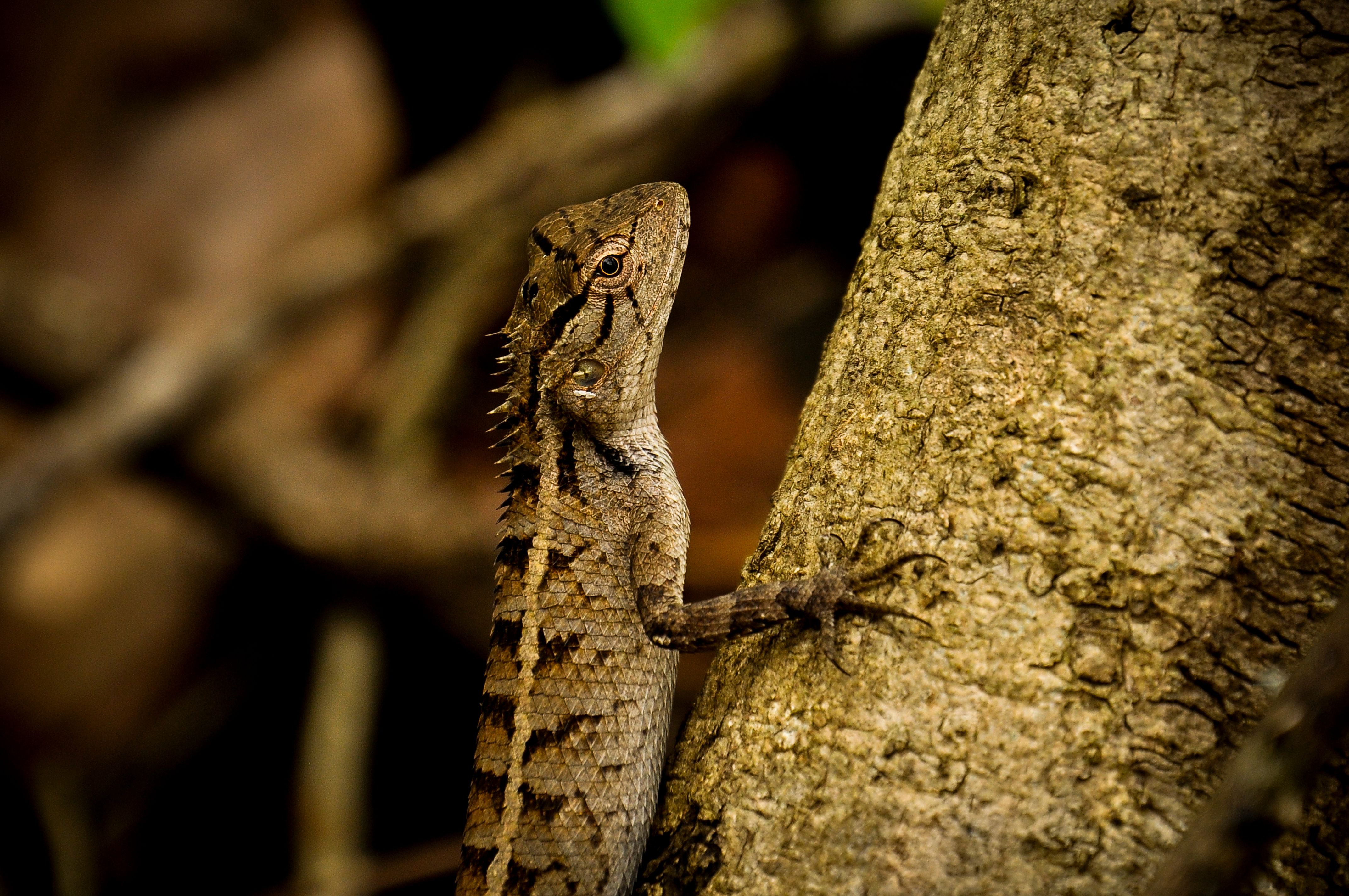
In practice, this means examining how features attributed to the Buru—such as size, posture, scales, or gait—might be the product of cumulative misidentifications, corroborated by other sightings, or even the projection of one animal’s image onto another’s context. For example, a watchful observer seeing a large monitor lizard near water could, in certain lighting and at a distance, interpret features as crocodilian rather than lizard-like. Over time, with repeated reporting and seasonal variation, such interactions can crystallize into a discernible “species” within local lore.
This lens does not dismiss eyewitness testimony; it reframes it. It recognizes that human perception is bounded by vision, memory, and the social life of stories. It also invites a careful triangulation: cross-checking with zoological knowledge about the local fauna, considering seasonal behaviors, and distinguishing between transient sightings and lasting motifs.
Ecology, Habits, and the Ground Description
What would a careful ethnobiological reconstruction of the Buru look like if we place it squarely within the ecology of the Ziro Valley? The region’s hydrology—seasonal streams, wetlands, floodplain habitats—supports a suite of reptiles and amphibians, including monitor lizards and crocodilians in broader South and Southeast Asian ecosystems. While genuine crocodilians are not native to the Himalayan foothills of Arunachal Pradesh in the way they are in other riparian ecologies, occasional vagrant individuals or misidentified encounters could contribute to a hybrid image in local retellings.
A practical approach for researchers is to map reported Buru encounters to environmental contexts: proximity to water, time of year, weather conditions, and the presence of other fauna. Do reports cluster around monsoon season when river banks become more treacherous and visibility decreases? Are there recurring features—gliding movement, a certain tail length, or a reliance on basking spots—that align with known reptilian behavior? Such patterns do not prove the creature exists, but they refine hypotheses about how the legend might encode legitimate ecological experiences.
History, Documentation, and the Role of Anthropological Contact
The Buru’s documentation—most famously through Ralph Izzard’s account in The Hunt for the Buru—meets the broader issue of how colonial-era and post-colonial researchers have shaped the transmission of local myths. Izzard’s text, and similar narratives, sit at a complicated intersection: they historically amplified voices beyond local communities while sometimes imposing external interpretive frameworks. Modern scholars must read these sources with a critical eye, distinguishing the descriptive value of firsthand field notes from the interpretive scaffolding that accompanies them.
In this respect, the present inquiry benefits from a double move: it treats traditional Apatani descriptions as legitimate knowledge systems in their own right, while applying contemporary scientific scrutiny to evaluate the plausibility of the described morphology and behavior. Rather than debunking or sensationalizing, a balanced approach foregrounds humility, transparency, and methodological rigor.
Constructing Plausible Scenarios: How a Multi-Faith, Multilingual Community Might “Create” a Buru
To explain how a Buru myth could arise without invoking a single, verifiable creature, three plausible generative mechanisms can be considered:
1) Observational conflation: Repeated encounters with distinct reptiles—monitor lizards, crocodilians, even large snakes—are described in a shared cultural language that emphasizes certain features (scales, length of the body, a perceived beak-like snout). Over time, this shared vocabulary casts a composite image into a single, memorable entity.
2) Symbolic projection: Local myths often encode social values or warnings. A Buru could function as a cautionary emblem—a creature of the forest that embodies ecological caution, or a reminder of boundary spaces between human settlements and wilderness.
3) Ecological memory sharpened by storytelling: Seasonal migrations or episodic abundance of prey around riparian zones could generate episodic sightings that, when retold with embellishment, crystallize into a recognizable motif—much as how many cryptids around the world emerge.
What this means for the credibility and purpose of the legend is not a verdict on truth in the literal sense, but an appreciation of how humans interpret and preserve ecological experiences through narrative devices. The Buru, in this view, becomes a living archive of the Apatani relationship with their landscape.
Methodological Reflections: What It Takes to Study Such a Legend Respectfully
- Engage directly with language communities: Fieldwork that prioritizes local voices in their own terms yields richer data than translations of the tale alone.
- Respect cultural context: Treat the Buru as part of a living cultural tapestry rather than an artifact for Western fascination.
- Distinguish between tale and observation: Clearly separate mythic framing from physical description to avoid conflation and misinterpretation.
- Use interdisciplinary triangulation: Combine ethnography, herpetology, and linguistics. When possible, corroborate with museum records, regional biodiversity surveys, and the ecological histories of the Ziro Valley.
- Document responsibly: Avoid sensationalism; preserve the integrity of indigenous knowledge and obtain consent for any publication that quotes or paraphrases community narratives.
Conclusion: Why the Buru Matters Beyond a Single Creature
The Buru is valuable not for the existence of a reptilian cryptid in the Ziro Valley, but for what it reveals about knowledge, belief, and landscape in a world where ecosystems are increasingly pressured and where local knowledge faces ongoing globalization. The Buru invites us to read legends as dynamic mappings of place—where a river’s bend, a creature’s gait, and a word’s cadence co-create a memory that feels real to a community across generations.
If one leaves with a single practical insight, it is this: legends like the Buru endure because they do essential cultural work. They encode ecological literacy, delineate ethical boundaries around shared space, and offer a mnemonic scaffold for communal identity in a rapidly changing world. For researchers, policymakers, and curious readers alike, the right questions are not merely “Does it exist?” but “What does the legend reveal about the people who tell it, the land they inhabit, and the relationships they seek to preserve?”
Further Reading and Suggested Avenues
- Ethnobiology of the Apatani: explore how the Apatani categorize flora and fauna and how those categories inform mythic thinking.
- Regional biodiversity surveys of Arunachal Pradesh: situate the Ziro Valley within broader reptile and amphibian distributions.
- Methodological treatises on cryptid studies: examine how language, perception, and memory shape witness testimony in ethnographic contexts.
- Comparative cryptozoology: consider parallels with other regional legends that may emerge from similar ecological and linguistic dynamics.
The Buru remains a compelling focal point for a broader conversation about how humans perceive the natural world and translate that perception into enduring stories. It is, finally, less a mystery to be solved and more a lens through which to examine the intimate relationship between people and place.