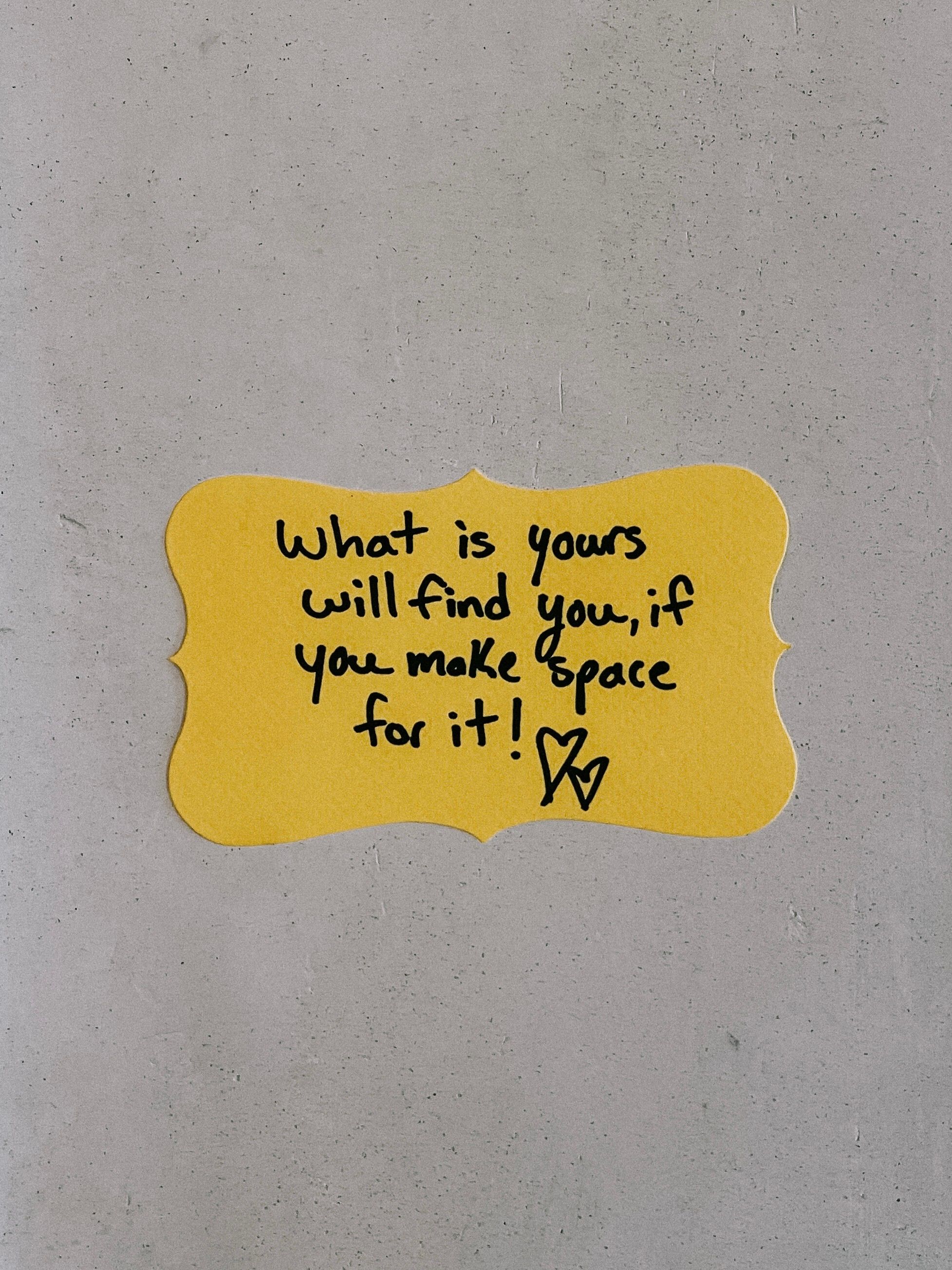
What’s new in your sukkah this year?
The moment you press a key in the browser, the screen lights up with a spark of providence and chance. You type a URL—one clean motion, a ritual you perform dozens of times a day—and the page unfurls as if summoned by a whisper. The keystroke is almost ridiculous in its simplicity: a few characters, a press, and the world tilts. What happens under the hood is where the real drama begins: a cascade of protocols, a chorus of lookups, and a choreography of routers that giggles at human impatience and insists on precision.
The hush of that instant is a miracle of ordinary infrastructure. Your fingertips conjure a request that travels through fiber, across oceanic cables that gleam like constellations beneath the waves, and knots itself into a dance of routers and switches. It is a pilgrimage of packets: tiny, obedient travelers that know where to go not because they possess desire but because they have been told where to go by an elaborate map grown from trust, agreements, and rules older than your habit of opening tabs. The router hears your address and fatefully hands it off to another, and then another, each hop a small revolution of engineering faith. DNS resolvers translate your human intention into machine coordinates; root servers act as the ancient librarians, knowing where every book—every domain—belongs. The chain is not visible when it works; it is only visible in its absence, in the moment when a lookup fails, or a handshake stalls, or a fiber coughs and coughs again.
The sukkah is a shelter built from light and air, a portable shelter that reminds us that protection is a design, not a given. Our digital sukkah is no less architectural: a space defined by the promises of a domain, a boundary drawn in legal ink and cryptographic keys. A domain name is not merely a “house”; it is a global coordinate, a front door, a legal deed, and a cognitive anchor all at once. We traded numeric IP strings for readable language, and in that shift we created a new terrain for civilization to navigate. A human-friendly address became a social contract: a legal trademark that says, “This is mine, and you can navigate here because you trust me or the system that says I am who I say I am.” It’s not just a pointer; it is a permit, a claim, a memory port in a sprawling networked city.
Consider the transformation from numbers to names: a switch from the raw to the interpretable. An IP address is precise, existentially brutal—there is no vanity in bytes, only the cold mathematics of routing. A domain name invites culture into the equation. It carries branding, expectation, memory, and a promise of availability. When you type “example.com,” you don’t just summon a server; you summon a reputation, a degree of trust, a path through a bureaucratic labyrinth that makes a promise to a user: that this path will lead somewhere meaningful, predictable, and perhaps comforting. The abstraction is seductive because it lowers the cognitive load, but the cost is a delicate, shared belief in a system that is materially fragile: registrars, certs, DNS caches, load balancers, and the physical lines that shape every trill of data around the globe.
There is a beautiful blindness in our era. We assume the internet’s backbone to be an evergreen river—constant, inexhaustible, and perfectly transparent. We forget the innings of human labor that maintain it: the registrars who hold the keys to who can claim a name, the root servers that coordinate a planetary address book, the registries that arbitrate who controls TLDs, the crypto that binds identity to authority, the service providers that negotiate routes, and the fiber that ties continents with a whisper of light. The web’s magic is not in the elegance of the page alone; it is in the invisible nervous system—the tremor of a heartbeat that never stops, even as you scroll, refresh, and swipe. We click, and worlds converge; we reach for a page, and a coalition of engineers, lawyers, poets, and technicians reveals itself in the background, almost shyly, almost all at once.
This is not a lament for complexity; it is a reminder of the seriousness of the everyday. The domain is a fragile bridge, a social contract that humans have learned to construct and maintain across oceans of ambiguity. Each DNS record is a note in a chorus that guarantees that your request will arrive, intact, to a destination that you can recognize and trust. When you wake in the morning and glance at your browser history, you are not merely visiting websites; you are traversing a curated network of human decisions, agreements, and technologies that make the otherwise impossible possible. The domain is the quiet hero of your digital life, and yet most of us treat it as background terrain—like the ground beneath a sukkah, stable enough to lean on, invisible until it falters.
And here is the paradox that won’t be silenced: the more we become accustomed to digital convenience, the more we must cultivate a posture of healthy skepticism. Every time you load a page, you are gambling a little with trust. You trust that the certificate is valid, that the server you reach is the one you intended, that the routing path has not been hijacked, that the name you type maps to a memory you recognize as reliable. The domain is a trust boundary as much as a pointer. It binds human memory and machine verification in a shared ritual of identity. When the system works, it is as if a neighborhood has formed a cordial habit of waving to each other across a borderless street. When something goes wrong—an SSL warning, a stale cache, a misdirected request—the tremor reveals a fragility we too easily ignore.
What if we stopped narrating the internet as a mere service and began narrating it as an ecosystem of promises? A domain is a promise kept in a world that doesn’t always honor promises by default. It is a deed recorded in a ledger that speaks both to the whim of a human owner and to the prudence of a distributed, cryptographic authority. It is a cognitive shortcut, yes, but one that requires ongoing maintenance: renewing registrations, renewing trust, rotating keys, updating registries, and ensuring that the path remains navigable for others who rely on it. The digital real estate you traverse daily is not a harmless convenience; it is a shared infrastructure built by many hands, with risk as a constant companion and resilience as a practiced art.
So, what about your sukkah this year? What new elements have you added to your shelter in the air and light? The browsing experience offers a playful invitation: to notice the ordinary, to re-sensitize to the extraordinary. Maybe a new DNSSEC record or a TLS certificate refresh would feel like a modernization of a pilgrimage, a way to shore up the fragile bridge that your browser crosses. Perhaps you’ll recognize that the “kayness” mats of yesteryear—whatever we call comfort and familiarity in the digital surface—need replacement with something more thoughtful: a domain strategy that respects the distance between human intention and machine execution. Or you might choose, as a ritual, to explore the micro-habits that keep your digital neighborhood honest: domain privacy, security hygiene, thoughtful domain renewal, a careful inventory of where you place your bets in the global chain of trust.
As you sit with your new bamboo schach—slick, resilient, and luminous in the right light—consider the metaphor it steadies: layers of protection that are both visible and invisible, a lattice that keeps the world at bay while inviting the world to come in. The internet’s hidden surface is a similar lattice: an architecture of trust, routing, and memory. Each domain you encounter is a small, living testament to human collaboration, a microcosm where legal, cryptographic, and technical cultures converge to permit a simple action—typing a sequence of letters and having a moment of revelation granted to you.
In the end, the most compelling revelation is not the speed of the click or the gleam of a bamboo mat, but the humility to recognize that every address you call home online sits on a delicate, global covenant. The illusion of digital convenience dissolves when you peer behind the curtain and perceive the unpaid labor of dozens of institutions, a thousand reminders of policy, and a web of human incentives all working toward a single, fragile goal: making the world legible, reachable, and alive for one more moment.
So keep typing. Let your fingers remind you that a URL is more than a path; it is a covenant with strangers who become neighbors, a district map drawn in code and law, a bridge that must be tended with care. And as you marvel at the new bamboo schach above, let it be a reminder that, behind every click, there is a story of trust, arbitration, and engineering that deserves our attention, gratitude, and skepticism in equal measure. The web is not a natural landscape; it is a carefully engineered habitat, and you are both resident and witness—in a sukkah of light, held together by a shared, fragile promise.