A little nostalgia post (first post)
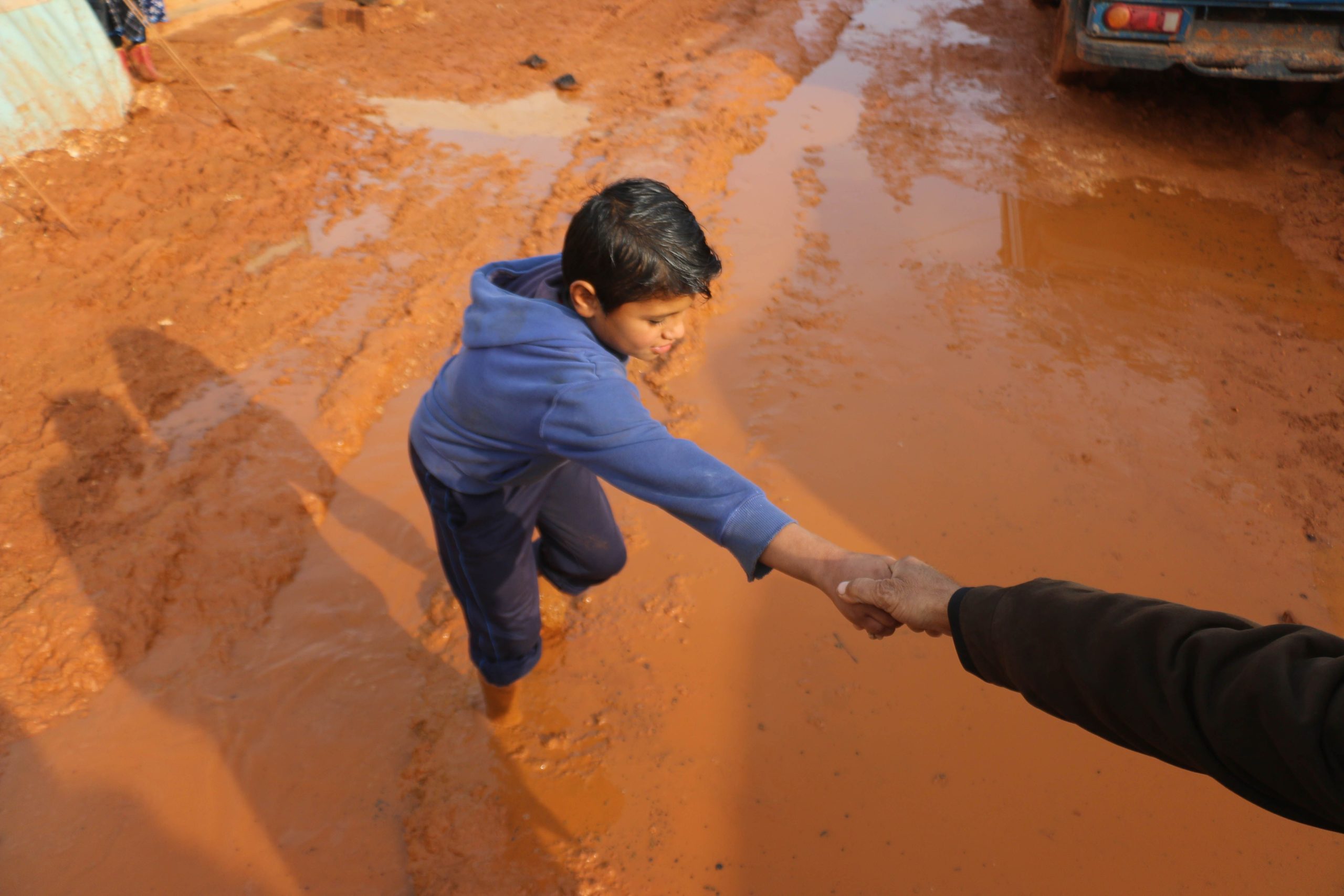
I don’t remember when this photo was taken. I think sometime during the 2000s, and I thought it was kind of cute, so I’ll just leave it here. A memory pressed between pixels, a small artifact of a time when our online lives still felt like a postcard you could tuck into your pocket. Yet as we press the bookmark of familiarity on that image, there’s a more stubborn photograph lurking behind the screen: the quiet truth that underpins every click, every scroll, every “like.” The truth is not a photograph you can hang on a wall; it’s a system, a discipline, a living architecture that hums beneath the surface of our everyday ease.
The Hook
Watch your finger hover over the keyboard, then strike. A keystroke—one of countless—translates a desire into a doorway. Type a name, and in the blink of a cultural reflex, a path opens. The browser gleams with a cursor, and a URL sails into the ether: http://example.com/. It is the simplest act of trust, a ritual we perform with almost no ceremony. But in those milliseconds, a century of invention unfurls: a cascade of compromises and agreements, of protocols and permissions, of people who imagined a shared space and built the invisible scaffolding to support it.
That single, almost casual keystroke is a gateway not just to a webpage but to a vast choreography of machines and agreements that never sleep. DNS resolvers, root servers, dozens of registries, fiber backbones, peering agreements, security handshakes, error codes, caching hierarchies—all orchestrate in microseconds to deliver a fragment of content to your eye. The ease you feel is not a gift of simplicity alone; it is the result of countless hands and minds who designed a system to feel almost magical, while hiding a tumult of gears behind the curtain.
The Deconstruction
What is a domain, really? It’s not merely a mailbox number for a website; it is a global coordinate system, a front door that can be opened by a human language rather than an arcane string of numbers. It is a legal deed, a contract written in policy and ownership—registrar agreements, WHOIS, privacy policies, and the delicate balance between openness and control. It is a cognitive anchor: a brand’s memory, its promise of continuity, its stake in trust. It is a bridge, too—a fragile bridge spanning continents of routers, fiber, and undersea cables, connecting office parks to bedrooms, startups to grandmothers, one nation’s digital heartbeat to another’s.
When humanity traded numeric IP strings for human-friendly names, we didn’t simply acheive readability; we reimagined memory itself. The domain name system converted millimetric, machine-readable coordinates into a story we could tell ourselves: “This is where we meet, this is who we trust, this is the language by which we greet the world.” The layer of abstraction did not erase the work beneath; it elevated it. It turned the internet from a telegram of packets into a city map, where each domain is a neighborhood with a history, a set of rules, and a responsibility to its residents—visitors and venerated clients alike.
Our civilization learned to speak in names, and with that linguistic shift came a social installation: a shared sense of place, a legal framework for responsibility, and a collapse of fear around the unknown machine. The domain became the place where the intangible—trust, identity, security—could take a visible shape. It allowed a brand to become a memory, a service to become a promise, and a moment of curiosity to become a continuous relationship.
The Blindness
We walk through this network of meaning with a comfortable blink. We assume the world’s digital front doors swing open because they ought to. We assume the registries beneath us operate as a given, an invisible infrastructure as intrinsic as air. Yet billions of requests pass through a web of roots and TLDs, an orchestra of servers that must harmonize across time zones, political borders, and technical constraints, all while facing the creeping pressure of scale, latency, and adversaries.
The reality remains almost comic in its quiet: a handful of root servers, a constellation of TLD authorities, thousands of registrars, and an ecosystem of resolvers—each with policies and caches and fallback routes—work together to deliver something as simple as “open this page.” If even one note in that orchestra stutters, the entire melody can falter. And still we move through it with a certainty that borders on sacrament—the sense that the internet simply exists to deliver our words in real time, anywhere, without our having to understand the weather it is born into.
Perhaps our cultural blindness is the point: we have learned to trust the system so completely that we forget to question it. We measure quality by a feeling—fast loading, readable typography, a crisp layout—without pausing to consider that each experience is built from a literal chain of agreements and mechanisms that could break or bend under pressure. A domain is not merely a house; it is a declaration of presence in a shared, fragile neighborhood. The system works because the rules keep it together, and the rules are the consent of many parties willing to keep faith with a collective dream—one that promises reliability even in the middle of a digital storm.
The Resolution
And so we arrive at the end with a gaze that refuses to pretend the river of convenience is an endless, calm stream. The internet is, at its core, a sprawling infrastructure of compassion and coordination, a nervous system built by engineers and dreamers who believed that name could become home, and that home could be reachable across oceans in the blink of a moment.
Let this be a gentle reminder: the daily routes we traverse—maps stored in the memory of our devices or in our minds—are more than utilities. They are commitments. Each domain you encounter is a tiny piece of civil infrastructure that must be stewarded: renewed, regulated, renewed again, and defended against entropy. And as you scroll past the nostalgia of a photo from a decade past, you glimpse a more profound memory: that the internet’s most intimate acts—your messages, your repositories, your discoveries—are made possible by a system of names that never sleep.
So, as you navigate your day, leave room for wonder and a streak of skepticism. Wonder at the scale and elegance of a global naming system that translates human language into machine routes across a planet of fibers and satellites. Skepticism, too, about the fragility that lingers behind every click: a reminder that the digital real estate we inhabit is not merely a convenience or a backdrop to our lives; it is a living, breathing construct shaped by law, trust, and the ceaseless labor of countless unknowns who ensure that a door, once unlocked in your browser, remains a door you can step through tomorrow.
In the end, the nostalgia for a photo and the awe for a domain converge: both are tokens of presence in a world that has learned to render time and distance as information. The nostalgia is a memory of a moment; the domain is a memory of a system. And the quiet truth we should carry forward is this: the routes we take online are not given, not guaranteed, and not immune to harm. They are earned through shared responsibility, meticulous engineering, and an everyday willingness to imagine a slightly better way to connect. The internet asks us to remember that these houses of information are built with care, and that every visit to a domain is a vote for the kind of world we want to inhabit together.