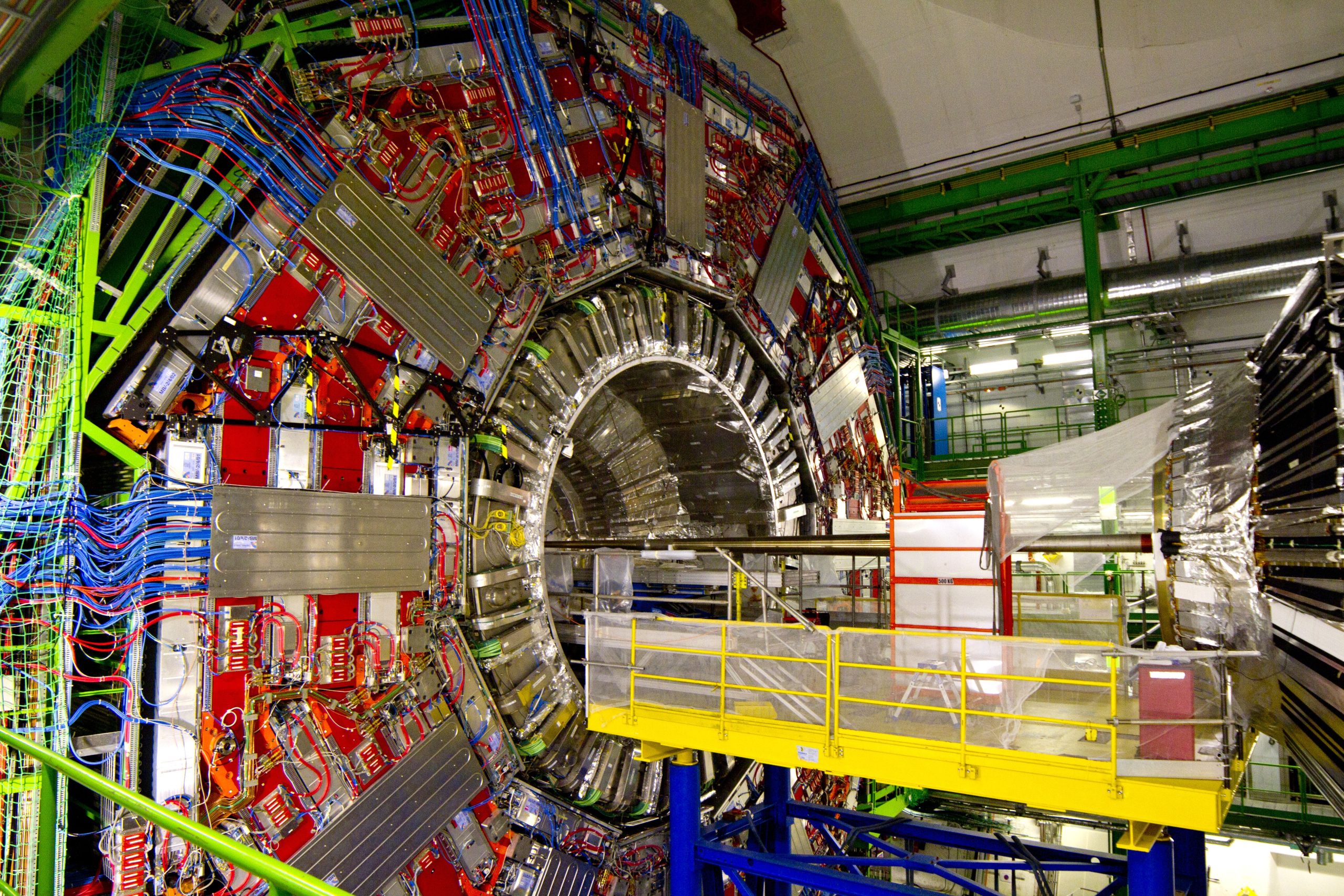
Could CERN Have Altered the Timeline? Exploring the Physics and Theories Behind the Possibility
In the realm of popular culture and collective memory, few phenomena evoke as much curiosity as the Mandela Effect—a situation where many people recall events or details differently from recorded history. One common example? The iconic line from Star Wars: many insist Darth Vader said, “Luke, I am your father,” when in fact, the actual line is “No, I am your father.” Despite overwhelming evidence, our memories often lead us to believe otherwise with startling certainty.
But what if such discrepancies aren’t just quirks of memory? Could they be signs of deeper, more profound distortions—potentially linked to the very fabric of reality itself? In this article, we delve into a provocative hypothesis: that recent high-energy experiments conducted at CERN might have inadvertently affected the timeline of the universe, supported by contemporary physics theories that challenge our understanding of reality.
The CERN Timeline and Its Intricacies
The Large Hadron Collider (LHC), CERN’s flagship particle accelerator, has been at the forefront of uncovering the universe’s fundamental particles. Since its inception, the collider has undergone numerous operational milestones and setbacks. Notably:
- First Beam Date: September 10, 2008
- Incident and Repairs: A nine-day malfunction involving magnet damage, helium venting, and subsequent repairs
- Restarts: Several operational re-launches, including a significant one in November 2009
These events are well-documented on CERN’s official communications and scientific reports (source). While routine in high-energy physics, some theorists speculate these experiments may have unintended consequences beyond particle physics—possibly influencing the very timeline of our universe.
The Mandela Effect: Memory’s Mysterious Confusions
The phenomenon popularly named after Nelson Mandela emerged around 2009, thanks to Fiona Broome’s efforts to chronicle shared false memories (source). People across the globe report recalling things differently from documented reality—be it movie quotes, historical events, or product logos. Such widespread discrepancies raise questions: Are these merely collective misrememberings, or indicative of alternate realities bleeding into our own?
Bridging Physics and Collective Memory
To explore this further, we turn to advanced physics models, especially in the realm of cosmology and multiverse theories.
The Ekpyrotic Universe Model
Proposed by researchers like Paul Steinhardt, the Ekpyrotic model suggests our universe originated from a collision of branes—multidimensional membranes existing in higher-dimensional space. This collision could spawn phenomena akin to ripples in spacetime, potentially causing shifts in physical variables or even “leakage” of information between universes (source). If such an event occurred at CERN, could it explain some shared false memories or timeline anomalies?
Multiverse and the Many-Worlds Interpretation
Building on the idea of multiple universes, physicist Hugh Everett III developed the Many-Worlds interpretation, proposing that every quantum event spawns a divergence, creating alternate realities (source). If our universe is part of such a vast multiverse, then experimental activity at CERN could, theoretically, influence which branch of reality we experience, possibly leading to discrepancies like the Mandela Effect.
Could Human Perception Be Affected?
While highly speculative, some theorists posit that large-scale quantum events might subtly influence collective consciousness or perception—altering memories before conscious awareness. Though unproven, this idea sees a fascinating intersection between physics, psychology, and philosophy.
Is It Plausible That CERN ‘Broke’ the Timeline?
The scientific consensus maintains that CERN’s experiments uphold safety standards, with measures in place to prevent cosmic-scale disruptions. However, the complex interplay of high-energy physics, quantum mechanics, and cosmology leaves room for hypothetical scenarios. The current theoretical frameworks—particularly those involving brane collisions and multiverse interactions—do not conclusively confirm such effects but provide intriguing models where they could occur under specific conditions.
Concluding Thoughts: Science, Speculation, and the Limits of Our Understanding
While there’s no concrete evidence that CERN has altered the fabric of reality or disrupted the timeline, the convergence of shared false memories, advanced cosmological theories, and high-energy physics creates a fertile ground for discussion. The possibility that experiments at the world’s largest particle collider could, in some remote way, influence our universe’s timeline remains a captivating hypothesis—one that challenges the boundaries between science and science fiction.
As our understanding of the universe deepens, so too do the questions about the nature of reality. Whether these phenomena are mere cognitive quirks or echoes of a deeper cosmic tapestry is a mystery that continues to inspire inquiry and imagination.
Sources and Further Reading
- CERN’s official documentation on the LHC timeline: CERN LHC Overview
- The origins of the Mandela Effect: Mandela Effect.com
- The Ekpyrotic Universe theory: Scientific American on Ekpyrotic Model
- Multiverse concepts and the Many-Worlds Interpretation: Hugh Everett Biography
- Classic reference to the Star Wars quote: Oscars Official Records
Note: This discussion blends established science with speculative hypotheses. While scientifically intriguing, many of these ideas remain on the frontier of theoretical physics and are not confirmed phenomena.