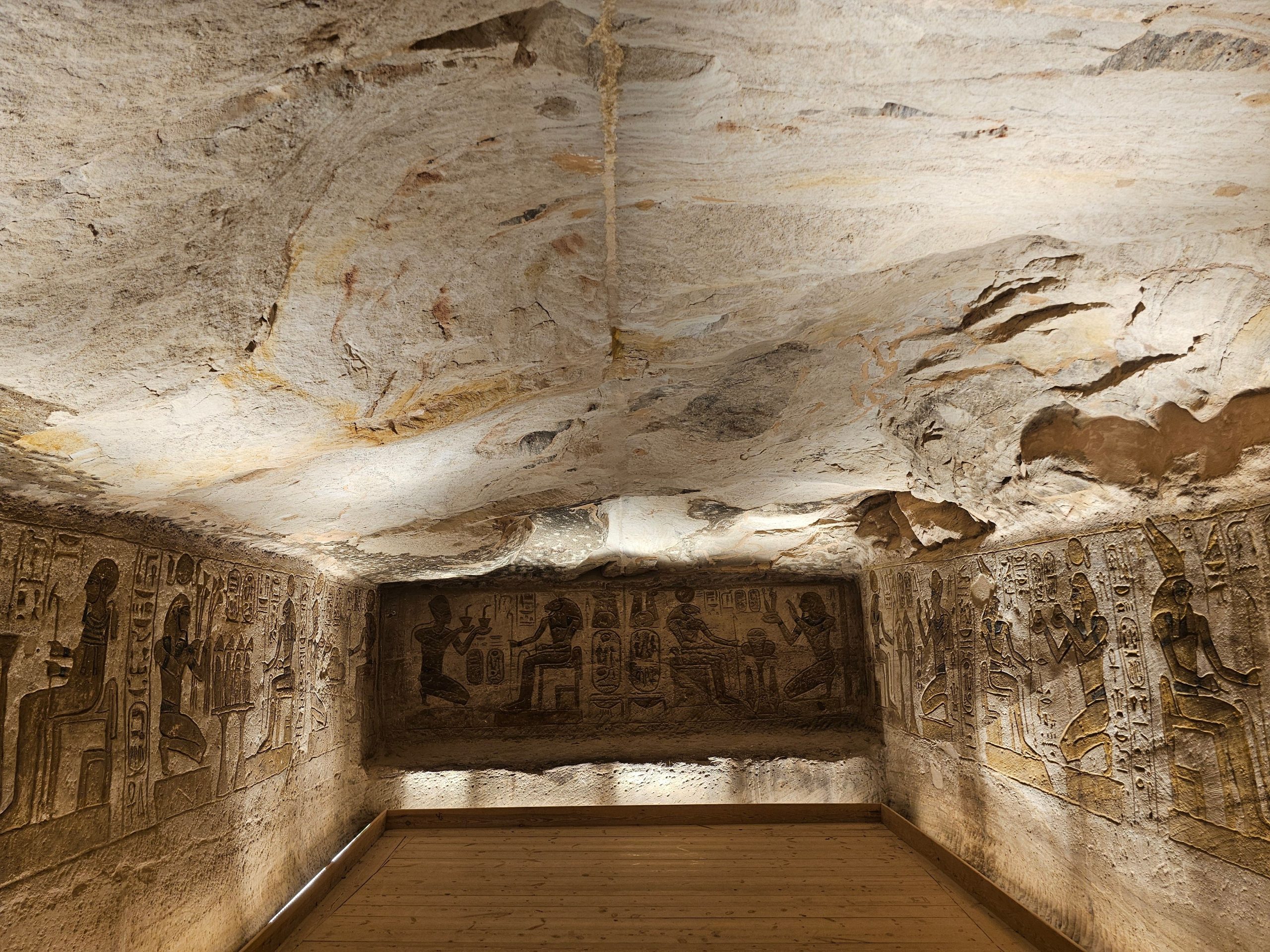
Unveiling Hidden Mysteries: Satellite Scans Suggest the Existence of the Legendary ‘Labyrinth of Egypt’
Recent advancements in satellite imaging technology have sparked renewed interest and speculation regarding Egypt’s historic sites. Notably, recent scans have hinted at the possible location of the legendary ‘Labyrinth of Egypt’—a colossal, subterranean complex long shrouded in mystery.
Discovery Overview
According to detailed analysis shared via a reputable online platform, satellite imagery reveals the existence of a massive, centrally positioned structure approximately 40 meters in length. This object appears to be metallic rather than composed of traditional materials such as stone or wood. Its distinctive shape bears a resemblance to a tic-tac mint, which adds an intriguing dimension to its potential function.
Historical Context
The concept of a vast Egyptian labyrinth has been immortalized by ancient Greek historian Herodotus, who recounted seeing the upper chambers before they became buried over time. Herodotus described a complex comprising “double sets of chambers, three thousand altogether, fifteen hundred above and the same number underground.” He also noted that Egyptian custodians would not disclose details about the underground portions, fueling speculation and intrigue for centuries.
Implications and Controversy
The presence of such a structure challenges mainstream perceptions that attribute all monumental Egyptian constructions solely to pyramid-building efforts. Many researchers and enthusiasts argue that the narrative of widespread looting and destruction may have overshadowed the possibility of undiscovered significant architectural marvels.
Sensitive Information and Secrecy
Historically, efforts to explore beneath the pyramids using satellite technology have faced obstacles. Previous satellite scans have been met with restrictions—researchers and teams conducting these scans have sometimes found themselves excluded or even blacklisted from accessing Egyptian sites. This reluctance is often attributed to concerns over national security protocols.
Despite these hurdles, the scientific community remains optimistic. The utilization of non-invasive satellite imaging has proven effective in uncovering hidden chambers and structures without disturbing the archaeological sites. Continued transparency could lead to groundbreaking discoveries that reshape our understanding of ancient Egypt.
Conclusion
As technology advances, so does our capacity to explore the mysteries of ancient civilizations. While official narratives often emphasize looting and destruction, emerging evidence suggests there may be much more left to discover beneath Egypt’s sands. The possibility of uncovering the ‘Labyrinth’ and its intriguing artifacts—such as the mysterious metallic object—serves as a compelling reminder of the ongoing journey to decode our shared history. Further research and open collaboration are essential to bring these hidden treasures to light.
For those interested, a comprehensive exploration of the recent scans and their implications can be found at this link: The Merlin Burrows Scans II.
Note: Satellite imaging is a powerful tool that continues to revolutionize archaeological exploration. Transparency and scientific rigor are key to unlocking the secrets of the past.
Disclaimer: This article is based on publicly available reports and interpretations of satellite data; further verification through archaeological exploration is required.