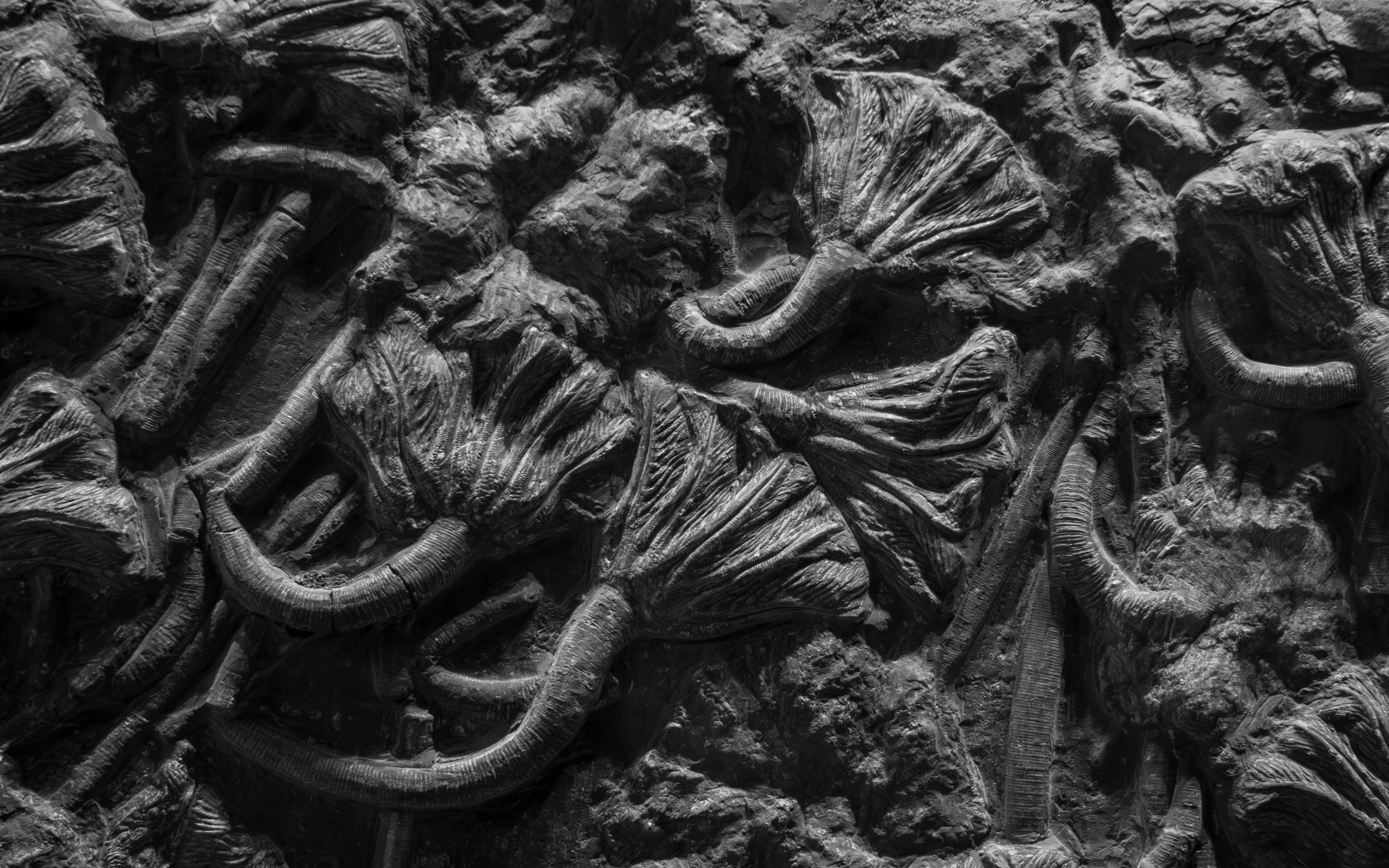
Understanding Deep Time: The Real Perspective on Humanity’s Ancient Mysteries
In the realm of historical and archaeological speculation, theories such as ancient aliens often capture the imagination and spark lively debates. However, there’s a compelling perspective rooted in the incredible vastness of human history—what we might call “Deep Time”—that offers a different lens through which to interpret these ancient mysteries. This view emphasizes just how extraordinarily old human existence truly is and how the passage of time alone can explain many of the curiosities we observe in global cultures and ancient structures.
The Unfathomable Age of Humanity
Our species’ journey is astonishingly ancient. Current archaeological records of the earliest written language span only about 5,500 years, a mere blink in the grand timeline of human existence. In contrast, modern Homo sapiens have been present on Earth for approximately 100,000 years—or more—meaning that recorded history comprises less than one-tenth of our entire human story.
As one insightful commentator once noted, if we consider the totality of human experience up to now and multiply it by twenty, we approach the minimum length of our journey as a species. This perspective highlights how fleeting written history is relative to our long evolutionary period. It’s easy to overlook this when faced with elaborate ancient myths, architectural marvels, or cross-cultural similarities—yet, these phenomena become more comprehensible when viewed through the lens of Deep Time.
The Limitations of Historical Records
Take, for example, the legendary Trojan War, believed to have occurred around 3,250 years ago. For centuries, scholars dismissed Homer’s account as myth until archaeologists uncovered the ruins of ancient Troy, confirming that the city did exist. Likewise, the historical record for many ancient civilizations, such as the Hasmonean Dynasty during the same period as the Roman Republic, is often fragmentary and biased—preserved only through a handful of accounts that may have been influenced by political or cultural agendas.
Most of what we know about ancient history is filtered through a limited number of sources, often written centuries after events transpired or driven by particular narratives. This curated snapshot offers only a narrow window into the past—a sliver shaped by bias, loss, decay, and the destructive forces of time.
Cultural Exchange and Lost Civilizations
Given these limitations, many of the so-called “ancient alien” or extraordinary technological theories might instead be better explained by the vast, interconnected web of human cultures over millennia. During Deep Time, civilizations and peoples—whose identities and stories are largely lost to history—could have encountered each other across continents or oceans, exchanging knowledge, technologies, and beliefs.
It’s conceivable that highly advanced societies existed for thousands of years, wielding complex social systems and organized religions, only to vanish—either through natural disasters, societal collapse, or shifting climate—leaving behind faint traces or myths. The commonalities across ancient religions and mythologies worldwide—such as stories of floods, gods, creators, or celestial phenomena—may be remnants of a once-unified spiritual tradition or shared cultural memory, dispersed and transformed over thousands of years.
The Endless Depths of Deep Time
The vastness of Deep Time is, in itself, a fascinating concept. It challenges our understanding of history and emphasizes that our current knowledge is merely a tiny fragment of what has come before. Indigenous oral traditions, for example, offer rich histories spanning tens of thousands of years, often aligning with scientific findings. The Hopi creation myths, for instance, seem to reference migrations across the Bering Strait—narratives that echo what archaeologists and climatologists are gradually uncovering about human movements.
Similarly, the Aboriginal peoples of Australia have oral histories dating back over 30,000 years. Some of these stories have been corroborated by scientific evidence, such as dating rock art and understanding environmental changes, illustrating how these oral traditions preserve genuine pieces of ancient history.
The Mystery of Preserved Civilizations
Erosion, tectonic activity, rising sea levels, and climate change have all contributed to the loss of countless ancient sites. Cities and settlements once thriving centers of civilization were erased or buried by natural forces—Doggerland in the North Sea being a prime example. This submerged landscape was once a lush land bridge connecting Britain to continental Europe, inundated around 6,500 years ago.
Further, many coastal cities—especially those integral to trade networks—have been swallowed by rising seas or buried beneath sediment and desert sands. These hidden remnants may hold clues to civilizations and technologies we have yet to uncover.
A Personal Reflection: The Allure of Deep Time
If given the chance, exploring 20,000 or 30,000 years into the past would be far more intriguing to me than revisiting ancient Rome, despite my academic focus. I imagine seeking out legendary conflicts, possibly described in ancient Hindu texts, involving flying machines or even descriptions resembling nuclear phenomena—nuggets of truth hidden within myth.
Myths, after all, often contain kernels of historical reality or experiences that were too profound, too overwhelming, to be fully understood at the time. Delving into the depths of Deep Time might reveal truths more astonishing than any extraterrestrial encounter—truths about human resilience, interconnectedness, and the mysteries we have yet to fathom.
In Conclusion
While the notion of ancient alien visitors captivates the imagination, it is crucial to remember the immense scale of human history—what it entails, what has been lost, and what remains buried beneath layers of sediment, ice, and myth. Deep Time provides a humbling perspective: human history is a vast, intricate tapestry woven over hundreds of thousands of years, with each thread potentially holding secrets waiting to be discovered.
Our understanding of the past is limited, yet this very limitation fuels curiosity and inspires ongoing exploration. Recognizing the grandeur of our ancestral timeline urges us to appreciate the resilience of human culture and the importance of preserving the stories that survive—whether in oral tradition, ancient ruins, or the silent depths of geological history.
References and Further Reading:
- “Deep Time: The Earth’s Geological History” – an exploration of Earth’s long timeline.
- “The Role of Oral Traditions in Preserving Ancient History” – insights into indigenous histories.
- “Lost Civilizations and Submerged Cities” – studies on underwater archaeology.
- “Mythology and History: Connecting Cultural Narratives with Archaeological Evidence” – understanding myth as historical memory.
Embarking on the journey through Deep Time not only redefines our understanding of human history but also deepens our appreciation for the enduring legacy of our ancestors.