Title: The Mirage of Access: Digging Beneath the URL to the Quiet Architecture of the Internet
Hook: The moment your fingers press Enter, you step into a corridor that stretches around the world. A single keystroke—a URL typed with casual confidence—unleashes a cascade of invisible labor: a chorus of servers waking from sleep, routers whispering routing tables across oceans, and fiber optics humming like the strings of a vast, unseen instrument. In that instant, the mind is invited to forget the fragility beneath the ease, to treat a domain as a natural landmark rather than a fragile, human-made contract. We click, and the globe responds; we rarely stop to listen to the machinery that makes that response possible.
The Deconstruction: What is a domain, really? It is not merely a house on the interwebs. It is a global coordinate, a front door that everyone can knock on, a legal deed that binds a brand to a name, a cognitive anchor around which reputation, memory, and commerce orbit. We traded the opaque torsion of numeric IPs for the comforting grammar of human-readable labels, and in that shift we gained something astonishing: legibility without losing precision. A domain is a promise and a map, a treaty between humans and machines.
- The coordinate: Behind every domain is a global address system that points to servers, caches, and data centers. When you request a page, your browser asks a DNS resolver to translate the name into an address, a translation that travels through a labyrinth of root servers, top-level domains, and authoritative name servers. It is a dance choreographed in nanoseconds, a choreography that makes the world feel instant.
- The front door: A domain is the gateway a person recognizes, the portal that invites trust. It carries memory, symbolism, and expectation. That front door is reinforced by TLS certificates, by the ritual of HTTPS, by the visible lock icon and the whispered assurance that the conversation is private in transit, even as a million other private conversations hum at the edges of the same network.
- The legal deed: Domains live in law as much as in code. Registrars, registrants, WHOIS records, and policy frameworks form a regulatory scaffold. The choice of registrar, the ownership duration, the transfer rules, the dispute resolution mechanisms—all of these are part of the title to a digital space. A domain can be bought or sold; it can be seized or suspended; it can become a battleground for ideas, brands, and identities.
- The cognitive anchor: A name anchors architecture in human memory. It’s how a user recalls a service, a brand, a memory of experience. The mind’s shorthand loves the stability of a recognizable label, while the underlying network remains a sprawling, fault-tolerant machine that tolerates the unpredictable shapes of human behavior.
Humanity’s grand abstraction—domain names—did more than simplify navigation. It shifted civilization’s trust from the intimate, numbers-driven logic of early networks to a social contract: you can remember this label; others can recognize it; the system will translate it into the machinery you need. When you type a name like example.com, you are participating in a multilingual, multilayered covenant. You’re not merely asking for a page; you’re invoking a shared belief that there exists a stable, navigable digital world behind the label.
The Blindness: We walk daily through a landscape of domain infrastructure with almost supernatural calm. We forget that billions of requests ripple across registrar networks, root servers, TLDs, and authoritative name servers in real time. We forget that edge caches store the shape of our intentions, that content delivery networks spread fragments of a single memory across continents to speed a single moment. We forget that beneath the gloss of a shiny interface lies a web of trust anchored in cryptographic keys and governance protocols, a system that keeps millions of independent parts in alignment long enough for a user to arrive at a page that feels instantaneous.
Consider the scale: a single domain triggers a chain reaction. A resolver in Asia asks a root server in North America where to find the TLD server for a .com domain. The TLD server points to the registrar’s database, which in turn authorizes the location of the authoritative server for that domain. The authoritative server returns the IP; the caching servers in continents greet the data with a heartbeat, and your browser, a small, devoted listener, assembles the symphony into a page you can read. It is a miracle of coordination, a modern cathedral built not of stone but of packets and keys.
But the certainty is brittle. The infrastructure is a tapestry of trust, and trust is a currency that can be devalued in an instant. DNS can be redirected; certificates can be misissued; a registrar can lock a domain in a dispute; a fiber cut can separate two halves of the planet’s voice for minutes, hours, or longer. The invisibility of this system is not a sign of resilience alone; it also hides a vulnerability: the fragility of abstraction. We become dependent on a global chain of agreements that are often local in origin and law. The domain we take for granted rests on a foundation of human choices—policy decisions, business compromises, and legal frameworks—that are as prone to error as any physical infrastructure.
The Deeper Metaphor: If a domain is a digital deed, what is it to the grand archive of civilization? The term “Googling” replaced the old art of browsing; “typing” a URL became a ritual of permission and reveal. Each domain is a small archipelago in a vast ocean of addresses; every DNS record a lighthouse guiding packets through the fog of routing. In this sense, the internet resembles an archaeologist’s trench: layers of sediment, each representing changes in language, policy, and technology. A domain name is a minted coin in that cavern: stamped with a culture’s priorities—legibility for the common user, security through cryptography, sovereignty via governance.
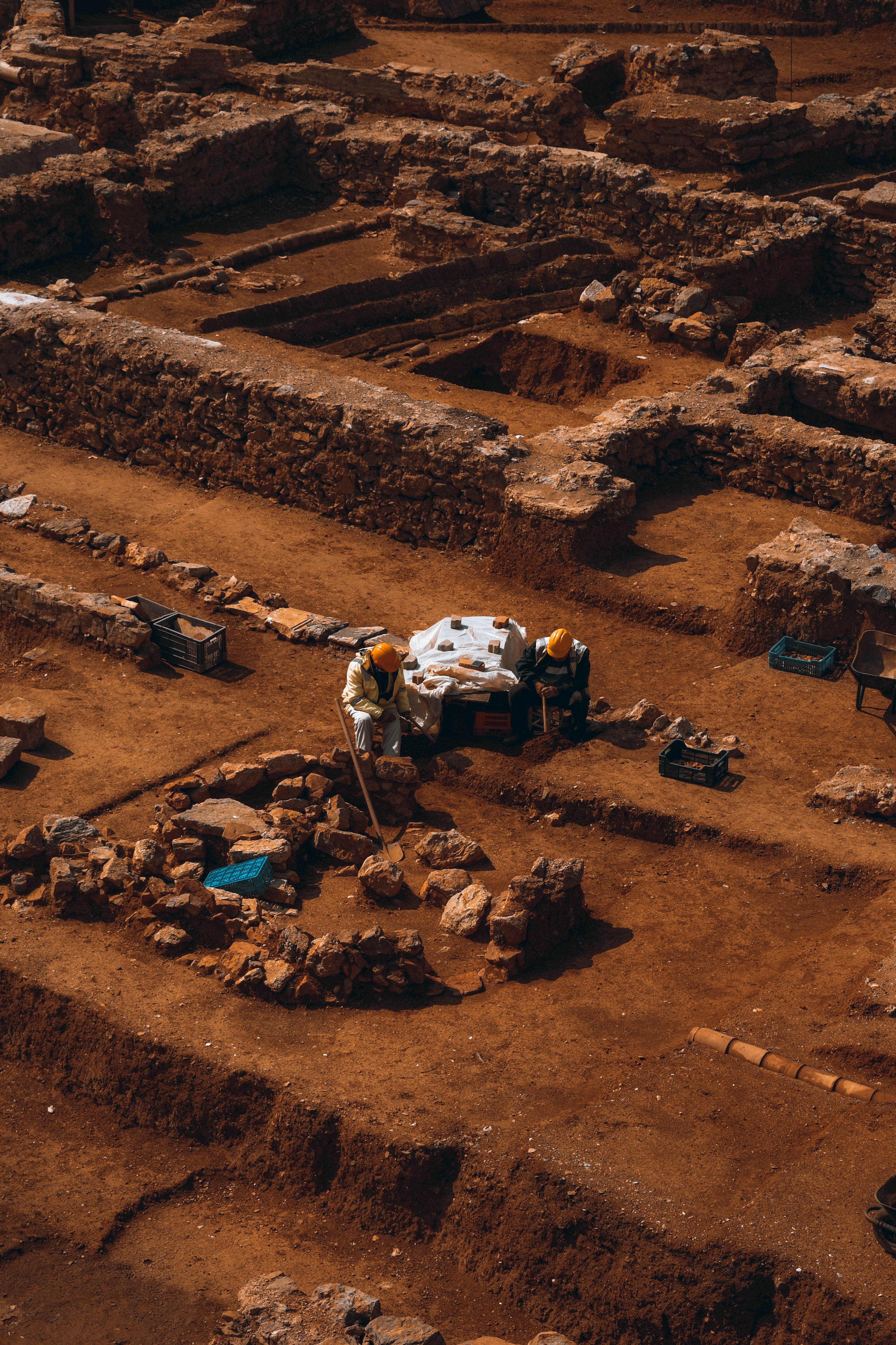
And what of the “unknown ancient civilization” implied by the original headline? Beneath the surface of our modern digital order lies a parallel excavation: the discovery that a simple label carries with it obligations, permissions, and a history of human cooperation that predates most of what we now think of as digital life. The ancient civs of Göbekli Tepe whisper of social complexity, ritual, and monumental cooperation. Our digital naming system whispers of the same complexity: the cooperation of engineers, policy-makers, lawyers, entrepreneurs, and everyday users who keep the system alive by remembering and respecting its rules.
The Resolution: So what do we do with this sense of wonder and caution? We cultivate a form of digital literacy that treats the everyday actions of typing a URL as a deliberate act of trust and endurance. We become more mindful of the fragility and beauty of the chain that brings a page to life: the DNS resolver, the root server, the TLD, the registrar, the authoritative zone, the glassy flash of a secure certificate, the cache that makes speed possible, the fiber that makes distance vanish in milliseconds.
- Listen to the silence between clicks: recognize that speed is not the absence of risk, but the presence of a carefully choreographed set of checks and balances, from cryptographic verification to policy compliance.
- Respect the architecture you rely on: understand that a domain’s value is not only in its content but in the governance, trust relationships, and infrastructure that defend its continuity.
- Nurture skepticism as a companion to curiosity: allow yourself to wonder at the scale and elegance of the system, while remaining vigilant about failures, breaches, and the human decisions that shape who has the right to name a space on the internet.
Closing Thought: The internet’s invisible nervous system asks us to hold two truths at once: that a name is a doorway into a living, global ecosystem, and that every doorway is only as strong as the promises it carries. When you type a domain into your browser, you don’t just request a page; you request a slice of a shared civilization built on cooperation, cryptography, and constant, quiet labor. The miracle is not the page you arrive at, but the fragile constellation of agreements that makes that arrival possible. In that realization, we find both wonder and a healthy skepticism—the right pair of lenses for navigating a world where convenience is always the product of thousands of hands and countless decisions, quietly doing their work behind the curtain of the everyday.