Understanding Through Experience: A Personal Reflection on the Israeli-Palestinian Conflict
In the complex and often emotionally charged discourse surrounding the Israeli-Palestinian conflict, many individuals seek to understand different perspectives with genuine curiosity and open-mindedness. Recently, I undertook an immersion into pro-Palestinian content, aiming to comprehend their arguments, follow their discussions, and approach the issue with an open heart and mind. Surprisingly, this deep dive only reinforced my belief in Zionism and the importance of Jewish sovereignty. I want to share this experience, hoping it offers insight into how personal engagement can shape one’s understanding.
Familiarity with the Conflict’s Historical Context
Before engaging with pro-Palestinian narratives, I possessed a solid understanding of the historical background. I am well-versed in the indigeneity of the Jewish people to the Land of Israel, having studied the ancient Jewish kingdoms and civilizations that existed millennia before modern political boundaries. I am aware of the Roman destruction of the Second Temple, the subsequent renaming of the region as “Syria Palaestina” by the Romans—an act widely interpreted as an attempt to erase Jewish heritage—and the enduring Jewish presence in the land despite centuries of dispersion.
Additionally, I understand the human cost of the conflict: the rejection of UN Resolution 181 by some Palestinian leaders, the wars of 1948 and 1967, and the recent atrocities of October 7th. I have also studied the aggressive attacks by Hamas, including unprovoked attacks on Israeli civilians, kidnappings, and the massacre that marked one of the bloodiest days for Jews since the Holocaust. I recognize the difficult position Israel is in—fighting terrorist organizations embedded in civilian infrastructure while striving to protect its citizens under circumstances that challenge norms of international law.
Personal Encounters and Firsthand Experience
My comprehension extends beyond academic knowledge. I have traveled through Judea and Samaria, met Palestinians, and witnessed elements of the conflict firsthand. I have visited Israel and experienced the realities of living in a region under threat, including spending time in bomb shelters due to rocket attacks. These experiences have informed my understanding far beyond what is often discussed in theoretical debates.
Encountering Pro-Palestinian Narratives
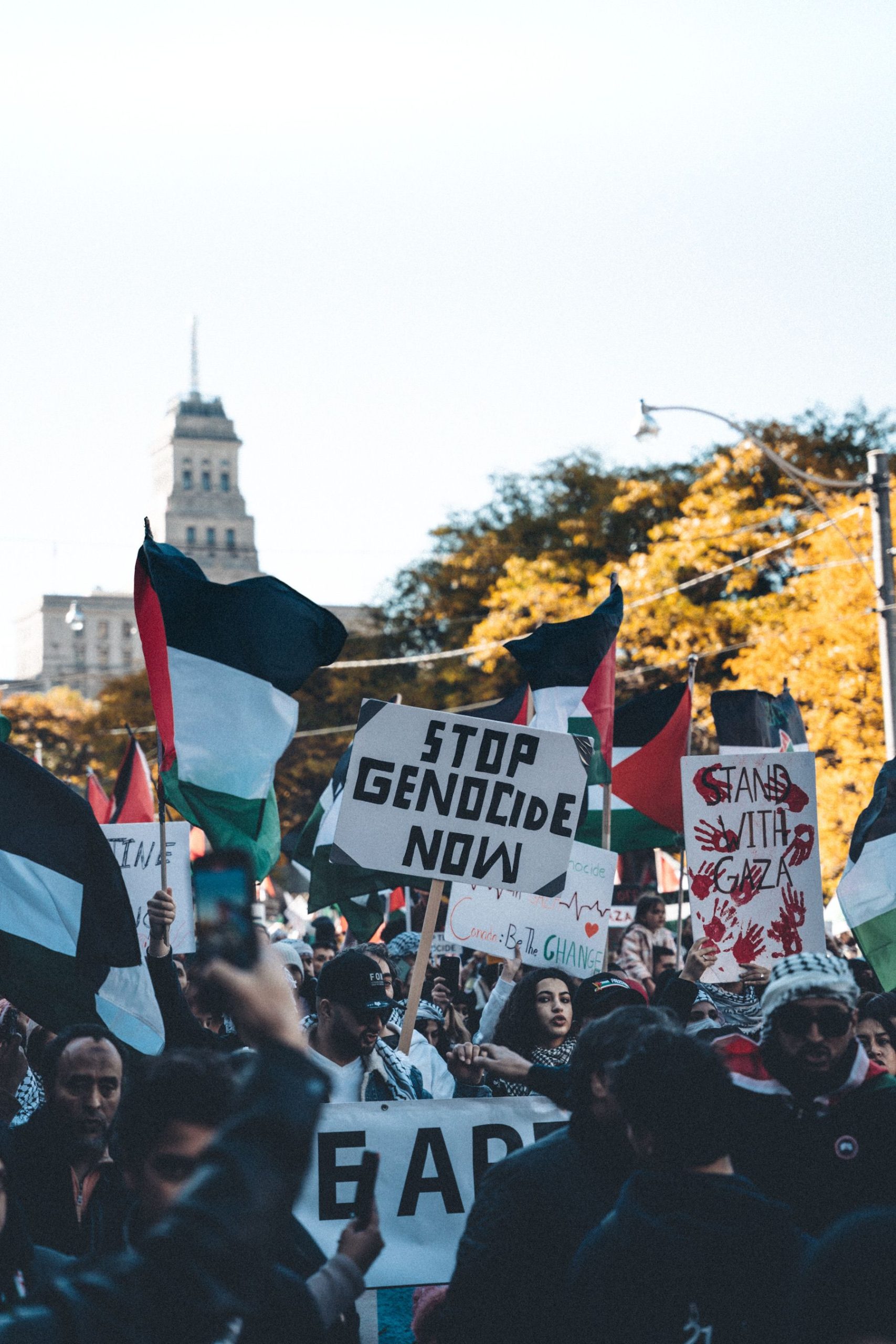
Motivated by a desire to understand the arguments that I was perhaps missing, I delved into pro-Palestinian online communities and discussions. What I encountered was disturbing—an undercurrent of denial and minimization of recent events, particularly the actions of October 7th. This narrative often involved glorification of Hamas and “resistance,” justification for the killing of Israeli civilians, and an obsessive demonization of Zionists. Conspiracy theories about Jewish influence, collective blame, and recycled blood libels appeared repeatedly, cloaked in the language of activism yet rooted in prejudice.
What became increasingly evident was that much of this discourse was not a critique of Israeli policies, military strategies, or political decisions. Instead, it fundamentally challenged the legitimacy of Jewish self-determination in their ancestral homeland. The hostility was directed at the very idea that the Jewish people possess the right to sovereignty.
A Shift in Perspective
Contrary to expectations, immersing myself in these perspectives reinforced my Zionist convictions. It became clear that the core issue confronting many pro-Palestinian narratives is not a nuanced debate over policies but an opposition to Jewish sovereignty itself. This realization solidified my belief that Jews cannot and should not outsource their safety and self-determination to the goodwill of others. The sovereignty and security of Israel are non-negotiable for me, and I believe Zionism—the principle that the Jewish people has the right to self-determination in their historic homeland—is a fundamental and justified pursuit.
Conclusion: A Personal Resolution
My journey into pro-Palestinian spaces was motivated by a desire to challenge my beliefs and deepen my understanding. Instead, it reaffirmed my commitment to Zionism and the importance of Jewish self-determination. These experiences have strengthened my conviction that Israel must remain capable of defending itself and that the Jewish connection to the land is both historical and ongoing.
In a world where narratives can often be polarized, personal exposure to different perspectives—especially when done with sincerity—can either diminish or reinforce one’s beliefs. For me, it has only bolstered my unwavering support for Israel and the principles of Zionism.
עם ישראל חי 🇮🇱