Title: The Haunting Question: What “Annabelle” and Paranormal Evidence Teach Us About Belief, Method, and the Limits of Science
In recent weeks, a pop-culture curiosity has widened into a sober, probabilistic discussion about how we know what we think we know about hauntings. A high-profile hobbyist purchase—comedians, museums, and a near-mythic Raggedy Ann doll—has thrust a familiar artifact of horror into a broader conversation about evidence, attribution, and the very boundaries between belief and method. This piece uses that moment not to sensationalize superstition, but to interrogate how we evaluate purported supernatural phenomena, what counts as convincing evidence, and what practical wisdom researchers have distilled from decades of inquiry.
A timely pause: what exactly are we examining?
The premise might be dismissed by some as entertainment or pseudo-science. Yet the underlying questions persist across fields: when people report inexplicable experiences, how do researchers separate genuine anomaly from misinterpretation, bias, or mundane explanations? What would constitute robust, repeatable proof that a spirit or entity exerts influence over the physical world? And crucially, what do these inquiries reveal about human perception, memory, social dynamics, and our hunger for meaning.
I. The artifacts of belief: why objects like Annabelle become focal points
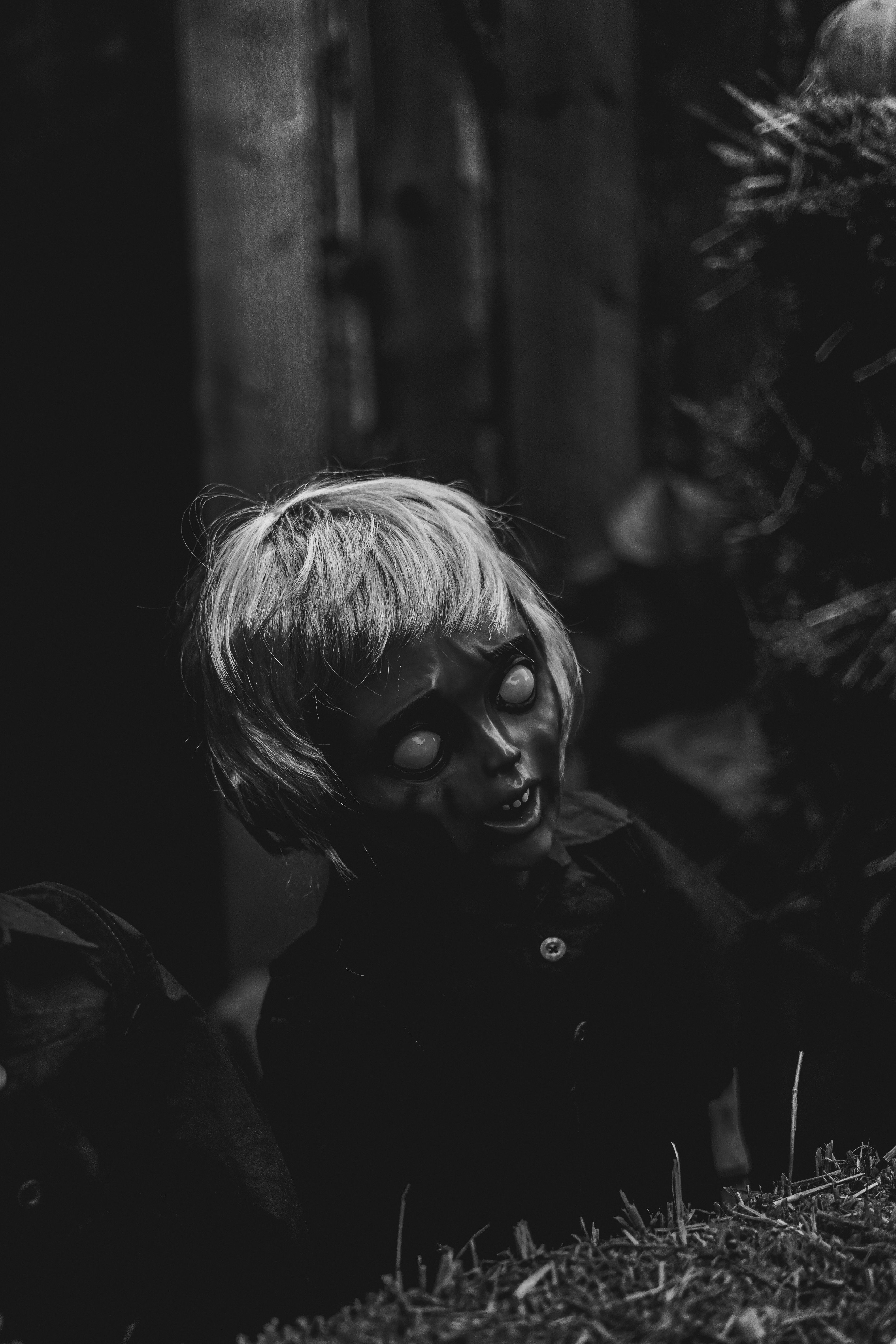
Doll artifacts, haunted houses, and similar talismans occupy a peculiar position in the study of belief. Objects are not neutral; they participate in social narratives. The Annabelle doll—popularized by films, mythologized anecdotes, and memorabilia—functions as a cultural shorthand for fear, the unknown, and the desire to externalize danger. In scholarly terms, such artifacts operate as semiotic anchors: they crystallize a cluster of expectations about malevolent agency, prior experiences, and cultural memory.
Yet material culture also shapes reporting. When an object is framed as haunted, witnesses’ perceptions can be influenced by the surrounding story. This is not a condemnation of their experiences, but a reminder that perception is a creative act—memory, attention, and context interact in ways that can amplify or distort events.
II. The strongest evidence often cited—and what it would mean to verify it
The Reddit conversation that inspired this piece highlights familiar categories of purported evidence in haunt investigations:
- Direct inexplicable phenomena: knocks, taps, raps, or movement with no immediate mechanical cause.
- Apparitions or sensed presences: visual or tactile impressions of a spirit, or the feeling that another person is nearby.
- Communicative indicators: responses to questions via knocks, audible messages, or seemingly purposeful correlations with observer intent.
Taken together, these categories form a lattice of observations. But in the language of rigorous inquiry, they raise one central question: can correlation be disentangled from bias, and can causation be demonstrated with sufficient confidence to rule out alternative explanations?
What would count as robust verification?
- Reproducibility across independent observers and environments. A phenomenon observed by multiple, blinded researchers under controlled conditions carries far more weight than a single observer’s recollection.
- Environmental controls that exclude ordinary causes. This includes checking for air currents, acoustics, structural settling, electrical interference, and other physical processes that can mimic paranormal activity.
- Temporal or experimental manipulation that yields predictable, testable outcomes. For example, if a supposed spirit responds to specific, repeatable prompts in a manner that cannot be accounted for by conscious or unconscious human agency, that would merit closer scrutiny.
- Documentation and data transparency. High-quality audio, video, environmental readings, and metadata allow others to re-examine claims and test interpretations.
These criteria do not render every paranormal report invalid; rather, they establish a baseline for distinguishing anecdote from evidence. Importantly, even strong data often leaves room for alternative explanations—psychological priming, suggestibility, or sociocultural storytelling—unless and until we can close those gaps with methodical corroboration.
III. The historical arc: how haunt research has evolved
Parapsychology and related investigative traditions have a long history, marked by both persistent curiosity and methodological pitfalls. Early investigations frequently balanced on a razor edge between disciplined inquiry and credulous sensationalism. As disciplines matured, scholars emphasized experimental design, replication, and skepticism toward sensational claims.
A few guiding developments have clarified the terrain:
- Controlled experimentation matters. Isolating variables, employing double-blind procedures where feasible, and using independent observers help counteract expectancy effects.
- Alternative explanations gain prominence. The field increasingly recognises cognitive biases, environmental factors, and social dynamics as viable accounts for many haunt-related reports.
- Statistical reasoning over anecdote. Large-scale patterns—when thoughtfully aggregated—can reveal whether reported phenomena exceed what would be expected by chance or bias.
- The sociology of belief. Studies emphasize how communities, media, and cultural scripts shape what people report and how they interpret experiences.
What remains contested is not whether unusual experiences occur, but whether those experiences unambiguously reveal a supernatural agent. The most defensible stance, in contemporary scholarship, is probabilistic: extraordinary claims require extraordinary, replicable, and well-vetted evidence. And even then, conclusions should be tempered by the recognition of uncertainty.
IV. When “haunting” becomes a lens for other questions
The strongest insights from haunting investigations often illuminate domains beyond the paranormal. They reveal:
- The reliability (and fragility) of memory. People may recall events vividly that never occurred exactly as remembered—memories can be shaped by suggestion, stress, or narrative coherence.
- The politics of interpretation. Who tells the story, who benefits from it, and how reputations or property values become entangled with belief.
- The psychology of fear. Fear amplifies perceptual sensitivity and fosters cognitive shortcuts that make unlikely events feel more meaningful.
- The epistemic limits of evidence. Some domains resist the gold standard of controlled experimentation, challenging researchers to devise robust, ethically sound methodologies.
These reflections are not a concession to superstition but an invitation to improve how we study humans’ interactions with the unknown. They also remind us that the appeal of hauntings often lies less in answering “Is there a spirit?” than in exploring “What would count as a trustworthy account, and what would it imply about human cognition and culture?”
V. Practical wisdom: how to approach extraordinary claims in everyday life
For readers who encounter persuasive but unverified stories—whether in media, museums, or personal conversations—here are guidelines that combine humility with intellectual discipline:
- Seek independent verification. Look for corroboration from multiple, unrelated observers and, where possible, environmental measurements. Beware single-reporter sensationalism.
- Distinguish experience from inference. A personal experience can be powerful; drawing broad conclusions about the external world from a solitary incident requires caution.
- Consider mundane explanations first. Before invoking the supernatural, exhaust probable physical and psychological accounts.
- Value falsifiability. A claim gains credibility if it can be tested and potentially disproved under controlled conditions.
- Recognize the social function of belief. People use stories to make sense of fear, grief, or loss. Understanding this context can illuminate why certain narratives endure.
VI. The contemporary landscape: where the field stands today and what’s on the horizon
Current discourse around hauntings sits at an inflection point between enduring public fascination and methodological refinement. Advances in sensing technology, open data practices, and interdisciplinary collaboration offer new pathways to interrogate claims responsibly. For example:
- Portable environmental monitoring can quantify temperature fluctuations, electromagnetic fields, and other variables that sometimes accompany reported phenomena. While these readings rarely “prove” a haunting, they can illuminate conditions that shape perception.
- Open science models encourage data sharing, preregistration of protocols, and independent reanalysis—reducing the chance that selective reporting or confirmation bias shapes conclusions.
- Collaboration with professionals in psychology, neurology, acoustics, and architecture fosters a more holistic understanding. One-off anecdotes can become part of a broader research program that scrutinizes how place, sound, and context influence human experience.
At the same time, it’s essential to resist the allure of definitive, universal predictions about hauntings. The future of this field will likely depend as much on cultivating robust epistemic norms as on amassing new “evidence” of the supernatural. In that sense, the real value of these inquiries lies in sharpening our collective discernment rather than delivering a final verdict on the existence of spirits.
VII. A closing reflection: what the conversation reveals about us
The current moment—a convergence of celebrity, spectacle, and sincere curiosity—offers a useful lens on human imagination. Whether one approaches it as a scientist, a skeptic, a folklorist, or a cultural critic, the core discipline remains the same: treat claims with seriousness, demand rigorous methods, and remain vigilant about the limits of what we can know.
If we entertain the idea that a notorious Raggedy Ann doll could be a conduit for something beyond ordinary explanation, the real question becomes operational: how would we distinguish a genuine anomaly from a compelling narrative? The answer is not to abandon wonder, but to refine our tools, articulate our uncertainties, and pursue truth with humility and precision.
Further reading and practical exploration for curious readers
- Memory and perception: how cognitive biases shape our interpretation of ambiguous stimuli.
- Experimental design basics in the study of unusual experiences: measures to improve reliability and reduce bias.
- The anthropology of haunt narratives: why communities tell certain stories and how those stories evolve.
- How to evaluate extraordinary claims in everyday life: a checklist for critical thinking without cynicism.
If you’re drafting Halloween coverage, museum exhibits, or thoughtful commentary on paranormal claims, this approach offers a constructive framework: acknowledge the human demand for meaning, apply rigorous scrutiny to evidence, and present conclusions that respect both curiosity and the boundaries of knowledge.
Enduring takeaway: extraordinary claims deserve careful, transparent inquiry. The best-informed readers walk away not with a pronouncement of certainty, but with a clearer map of what would count as compelling proof, what remains plausible but unsettled, and how to think about the mysterious with both humility and intellectual energy.