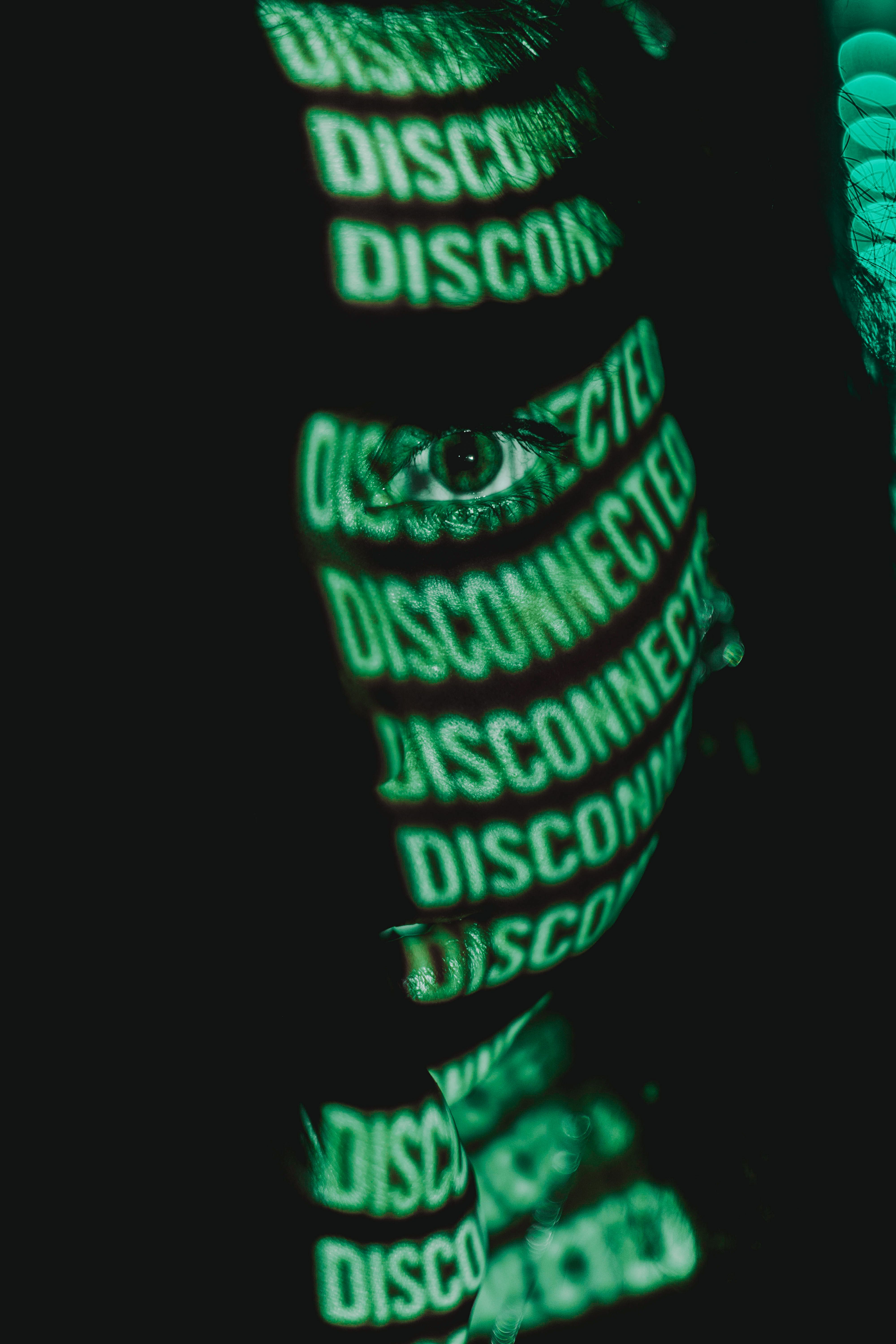
We are living in the age of controlled disclosure
In recent years, public imagination has become accustomed to the idea that “disclosure” is a singular, decisive moment—an engineered reveal that floods the collective consciousness with new truths and new certainties. Yet as historians and sceptics alike have observed, the reality is far more contingent. Disclosure today is less a dramatic unveiling than a carefully choreographed dialogue between institutions and audiences, a process shaped as much by media timing, political calculation, and institutional risk as by the stubborn weight of evidence itself. We inhabit an era in which information rarely travels in a straight line from source to public, but is filtered, edited, paused, and sometimes silenced. The Tic Tac encounter is not an isolated curiosity; it is a hinge event that reveals how modern epistemic authority operates, what it chooses to reveal, and what it chooses to keep under wraps.
The Tic Tac moment: a proximate cause, not a plot spoiler
In late 2017, the New York Times published a report accompanied by dazzling footage described as “unidentified aerial phenomena” (UAP). The article, together with previously released videos, reignited a national conversation about what governments are seeing, what they know, and what they are prepared to say publicly. It didn’t create belief so much as a fatigue of belief: a sense that the matter had finally broken out of the shadows, even as the details remained stubbornly disputed. The subsequent years did not deliver a clean, unambiguous reveal. Instead, they unfolded as a sequence of calibrated disclosures—some clearly motivated by regulatory needs, some by political risk calculation, others by the enduring human appetite for mystery.
This pattern is emblematic of contemporary information governance. Governments, scientists, and military agencies no longer rely on single, epochal press conferences to reset public opinion. They cultivate a layered disclosure strategy: routine declassifications, sporadic leaks, official investigations, congressional hearings, and occasional “soft disclosures” through sympathetic media or thought-leadership channels. The aim is not merely to inform but to manage uncertainty, to provide plausible deniability, and to preserve strategic advantage in a world where information travels faster and wider than ever before.
Why controlled disclosure has become indispensable
1) Strategic ambiguity serves institutional risk management. Full, unfiltered disclosure can create political, legal, or security vulnerabilities. By thoughtfully curating what is released—and when—leaders can limit potential blowback while preserving room for future updates. This is not a betrayal of public trust so much as a recognition that knowledge is rarely binary: it exists in degrees, contexts, and narratives that must be managed like assets.
2) The gatekeeping function has migrated to plural centers of influence. While the past century saw a handful of megaphones—major newspapers, top universities, central governments—the present era distributes credibility across multiple actors: investigative journalists, independent researchers, think tanks, non-governmental organisations, and private sector data repositories. Each actor has incentives to shape the story, and each has corresponding access to different slices of the truth.
3) Technology complicates the timing of revelation. Satellite imagery, tracking data, whistleblower accounts, and machine-aided analysis offer powerful tools to uncover new angles, yet they also empower actors to contest narratives vigorously. The same digital agility that makes disclosures possible also accelerates misinformation, misinterpretation, and strategic misdirection. The modern information environment rewards nuance over absolutes and careful sourcing over sensational headlines.
4) Public anticipation vs. institutional endurance. Audiences crave clarity, while institutions must endure the long arc of review, verification, and policy consequence. Disclosure is often a sequence of incremental steps designed to build legitimacy over time. The result can feel slow, even frustrating, but it is a rational response to the cumulative weight of evidence and the diverse interests at stake.
What counts as a disclosure, and who counts as a legitimate storyteller?
Disclosures vary in kind, tone, and credibility. A declassified tranche of documents may carry the imprimatur of state authority; a leak from a mid-level official may be contested by higher authorities; a peer-reviewed study may set a scientific benchmark. The legitimacy of a disclosure rests not merely on the surface notice of revelation but on the traceability of methodology, the replicability of findings, and the accountability of the actors involved. In today’s ecosystem, credibility is a product of three intertwined variables:
- Source integrity: Who has access to the underlying data? What are their incentives? How transparent is their process?
- Process legitimacy: What standards govern the release? Is there independent verification, external peer review, or corroborating evidence?
- Narrative coherence: Does the disclosed information fit within a coherent, falsifiable framework, or does it rely on evasive language, anonymous claims, or selective emphasis?
A responsible reader should therefore develop a habit of testing disclosures against these criteria, rather than taking at face value either the most sensational claim or the most cautious silence.
Whose interests guide the current regime of disclosure?
Several powerful currents shape today’s disclosure landscape:
- National security and geopolitics: Clarity about unknowns (e.g., UAP, advanced surveillance capabilities) can influence strategic posture—deterrence, alliance dynamics, and defense budgeting. Skepticism is essential here: policy decisions often ride on risk assessments as much as on evidentiary certainties.
- Public accountability and democratic legitimacy: Taxpayers and citizens deserve to know how public institutions allocate resources, assess risks, and manage crises. Yet accountability is a balancing act; complete transparency could jeopardize ongoing investigations or sensitive technologies.
- Scientific integrity and methodical inquiry: The scientific community thrives on reproducibility, falsifiability, and open critique. Disclosures that invite independent replication are the gold standard, but the pathway to such replication may be obstructed by data sensitivity or proprietary concerns.
- Media ecosystems and information hygiene: Journalistic norms, editorial discretion, and platform-driven amplification all influence the pacing and framing of disclosures. Critics argue that sensationalism can distort public understanding; proponents contend that timely disclosure is a public good.
The practical consequences: what “disclosure” looks like in practice
- Incremental truth-accumulation: The modern approach resembles a mosaic rather than a photograph. Small, verifiable tiles appear gradually, while larger, blurrier areas take longer to resolve.
- Narrative engineering: Public communication often aims to preempt fear, manage expectations, and preserve policy options. This can manifest as cautious language, staged briefings, or the selective release of footage and data.
- Whistleblower protection as a policy instrument: Whistleblowing remains a fragile but vital mechanism for surfacing undisclosed information. Strong protections correlate with more reliable disclosures, yet whistleblowers frequently face retaliation, forcing them to weigh personal risk against public benefit.
- Legal and ethical guardrails: Declassification schedules, classification reviews, and ethical guidelines shape what can be shared and when. These guardrails are not merely bureaucratic trivia; they define the boundaries of public knowledge and, by extension, political possibility.
Historical parallels and what they teach us
If we look back, the rhetoric around disclosure cycles in other domains—nuclear weapons, intelligence reforms, climate data, corporate accounting—reveals a common pattern: certainty is hard-won, retreat is common, and the truth frequently appears only after a lag filled with contested interpretations. What changes across domains is the speed and granularity of the process. Digital platforms have compressed timescales; international norms around transparency have evolved unevenly; and public demand for accountability has grown more articulate, but also more fragmented.
In that sense, the Tic Tac episode is less a technological revelation than a crisis of epistemology. It challenges our assumptions about who possesses knowledge, how knowledge is validated, and how the public’s right to know should be balanced against legitimate security concerns. It also invites us to reflect on the limits of certainty in an era where the very sources of evidence are distributed and contested.
Practical wisdom for navigating the age of controlled disclosure
- Develop a disciplined skepticism: Treat every disclosure as a signal within a broader information ecology. Ask: What is the source? What is the method? What corroborates or contradicts the claim? What are the potential biases or incentives at play?
- Seek corroboration across independent channels: When possible, compare official documents with independent research, technical analyses, and qualified expert testimony. Triangulation strengthens understanding and mitigates the risk of misinterpretation.
- Distinguish between knowledge and narrative: A disclosure may reveal facts, but how those facts are interpreted, packaged, and communicated often determines public impact. Distinguish raw data from the story built around it.
- Prioritise transparency without compromising security: Institutions should strive for openness about processes and uncertainties while preserving the legitimate need to protect sensitive information and operational capabilities.
- Cultivate institutional literacy: For journalists, policymakers, and citizens, developing fluency in the language of classification, declassification, risk assessment, and scientific critique improves collective discernment.
Future directions: what to expect in the coming years
- More granular declassification schedules: Expect longer, more nuanced public timelines as governments weigh strategic implications against the public interest. Expect more partial disclosures that require interpretation and expert input to be meaningful.
- Enhanced data stewardship: As datasets expand in volume and variety, credible disclosure will depend on robust data governance—clear provenance, rigorous documentation, and verified analytics.
- Greater emphasis on independent verification: Third-party audits, independent commissions, and cross-institutional collaborations will become standard mechanisms to build legitimacy around contested disclosures.
- Shifts in public expectations: The public’s appetite for transparency is unlikely to wane, but tolerance for ambiguity may grow thinner. Communicators who can present uncertainty as a structured, honest position will gain trust over those who pretend certainty where none exists.
A closing reflection: the ethical dimension of openness
Open information is not simply a procedural ideal; it is an ethical commitment to communal sense-making. If a society cannot talk honestly about what it does not fully understand, it loses the capacity to navigate risk collectively. The current regime of controlled disclosure embodies a pragmatic compromise: reveal enough to inform, protect enough to preserve safety, and invite enough scrutiny to sustain legitimacy. The challenge is not to abandon control altogether but to ensure that control is exercised with humility, accountability, and a prioritisation of genuine public interest over short-term convenience or institutional self-preservation.
For readers who want to engage more deeply with this topic, consider mapping the disclosure landscape in your own field. Identify the major actors, the typical channels of information flow, and the points at which public understanding is most vulnerable to misinterpretation. Ask where transparency has delivered tangible benefits, and where it has produced unintended harms. In a world where disclosure is rarely a one-time event, the most valuable skill is not certainty, but discernment—the ability to read the structure of information itself and to participate in a more honest, constructive conversation about what we know, what we don’t, and what we owe to one another in the pursuit of truth.